South America

South America is the fourth-largest continent on Earth. It covers about 17,840,000 km2 (6.89 million square miles), roughly 12% of the world’s land area, and is home to around 430 million people across 12 sovereign nations. It is connected to North America by the narrow Isthmus of Panama.

Where is South America?

South America lies almost entirely in the southern hemisphere. It is bordered by the Pacific Ocean to the west, the Atlantic Ocean to the east, the Caribbean Sea to the north, and the Southern Ocean at its tip near Cape Horn. The equator crosses the northern part of the continent.

South American geography

The continent is dominated by the Andes, the longest mountain range on Earth, running 7,000 km down the entire western side. The highest peak in the Andes (and in all of South America) is Aconcagua in Argentina at 6,962 m. East of the Andes lies the immense Amazon Basin, drained by the Amazon River (the world’s largest river by discharge volume, and the second-longest after the Nile). The Amazon Rainforest covers approx. 5.5 million km2 and is home to more species than anywhere else on Earth. To the south are the Pampas (grasslands) and the Patagonian steppe. The Atacama Desert in Chile is the driest non-polar place on Earth, while Angel Falls in Venezuela is the world’s highest waterfall (979 m).

Countries of South America

South America has 12 sovereign countries: Brazil (the largest by area and population, and the only Portuguese-speaking country), Argentina, Peru, Colombia, Venezuela, Chile, Ecuador, Bolivia, Paraguay, Uruguay, Guyana, and Suriname. French Guiana is a department of France rather than a sovereign nation. The continent shares its history with the great pre-Columbian civilisations: the Inca Empire in the Andes is the most famous, and was colonised mostly by Spain and Portugal in the 16th century.

People, languages, and religions

The two main languages are Spanish (in every country except Brazil and the Guianas) and Portuguese (Brazil). English is spoken in Guyana, Dutch in Suriname, and French in French Guiana. Many indigenous languages survive, especially Quechua and Aymara in the Andes. Roman Catholic Christianity is the dominant religion, often blended with indigenous spiritual traditions.

Wildlife and famous landmarks

South America’s rainforests teem with jaguars, anacondas, capybaras, sloths, toucans, macaws, and poison dart frogs. The Andes are home to llamas, alpacas, vicuñas, and the Andean condor: one of the world’s largest flying birds. Famous landmarks include Machu Picchu, the lost Inca city in Peru; Christ the Redeemer overlooking Rio de Janeiro; Iguazu Falls on the Argentina, Brazil border; the Salar de Uyuni salt flats in Bolivia; the Nazca Lines in the Peruvian desert; and the Galapagos Islands, where Darwin developed his theory of evolution.

Explore South American countries

Choose any of the 12 countries below for its complete fact file.

See also

The flag of Argentina: three horizontal bands of light blue, white and light blue, with a golden Sun of May face in the centre.ArgentinaArgentina is the second largest country in South America, running from subtropical forest in the north to Patagonia in the south. It is famous for beef, football and the tango.
Capital city
Buenos Aires
Population
about 46,000,000
Area
2,780,400 km2
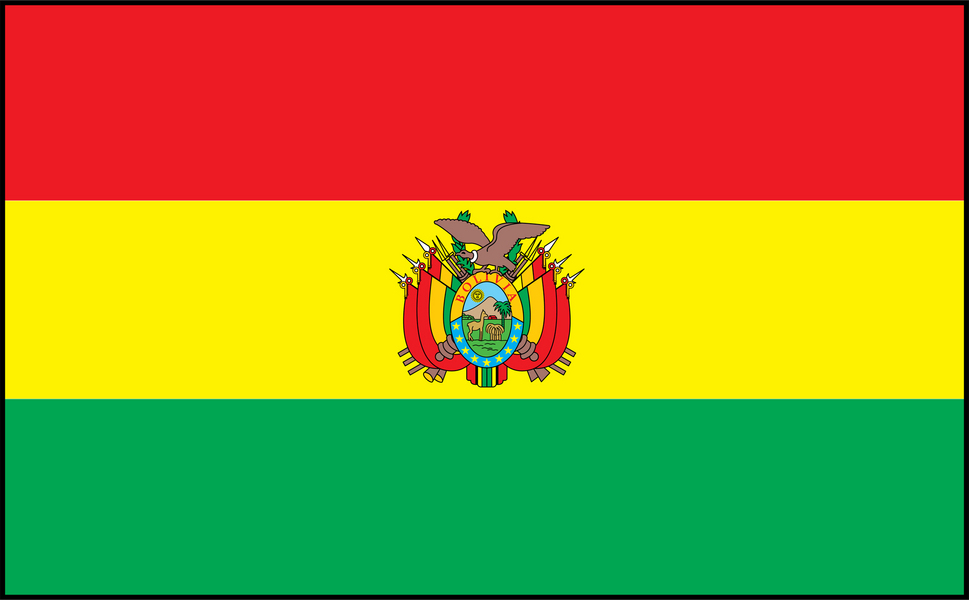
The flag of Bolivia: three horizontal bands of red, yellow and green, with the national coat of arms in the centre of the yellow band.BoliviaBolivia is a landlocked South American country high in the Andes. It has two capitals, the world's largest salt flat at Uyuni, and a large Indigenous population.
Capital city
Sucre (constitutional) and La Paz (seat of government)
Population
about 12,400,000
Area
1,098,581 km2
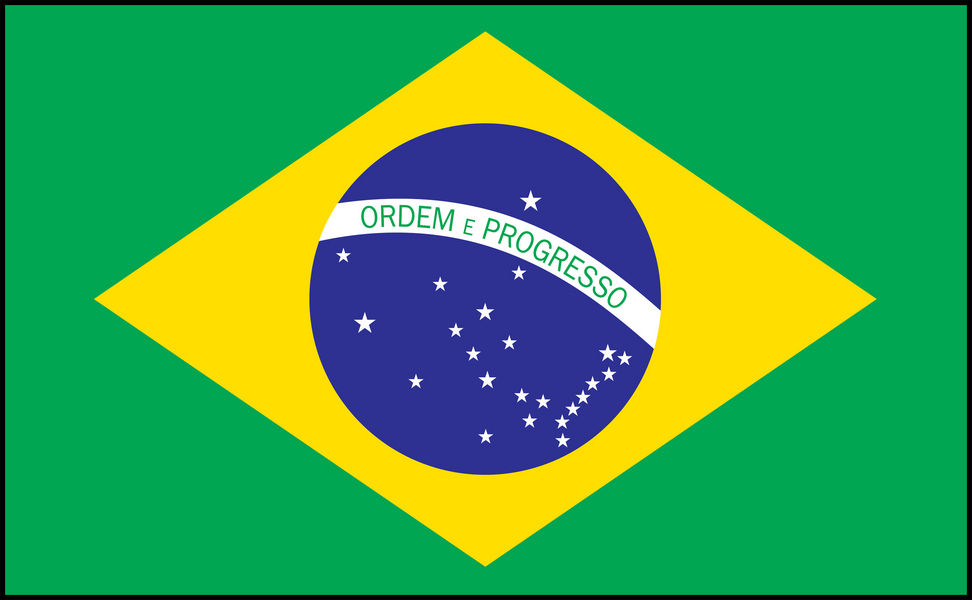
The flag of Brazil: a green field with a large yellow diamond containing a blue globe crossed by a white band reading Ordem e Progresso, and scattered white stars.BrazilBrazil is the largest country in South America and the fifth largest in the world. It holds most of the Amazon rainforest and is the only Portuguese-speaking country in the Americas.
Capital city
Brasilia
Population
about 216,000,000
Area
8,515,799 km2
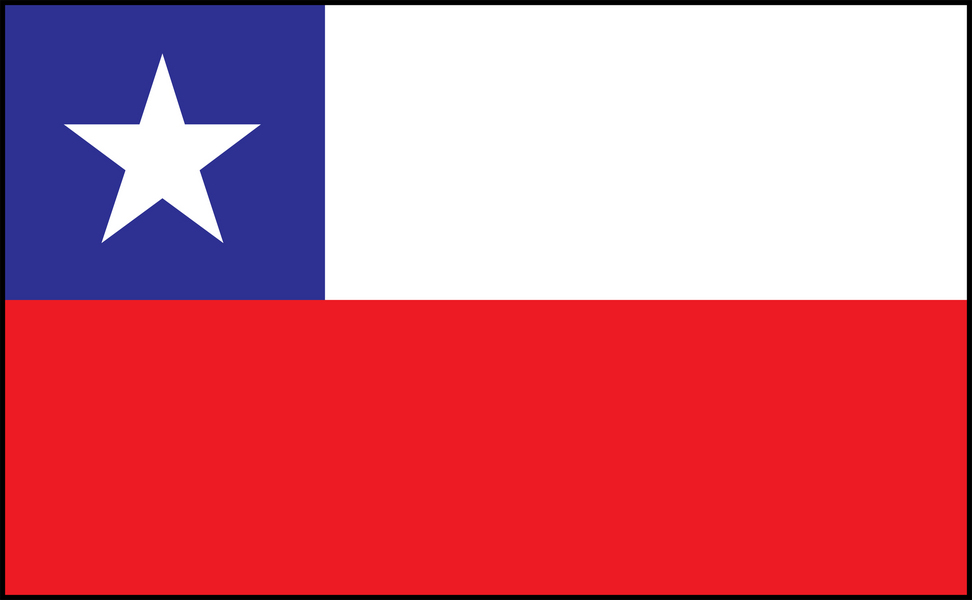
The flag of Chile: a white band above a red band, with a blue square in the top left containing a single white star.ChileChile is a long, narrow country running down the western edge of South America, from the Atacama Desert in the north to glaciers and fjords in the far south.
Capital city
Santiago
Population
about 19,600,000
Area
756,102 km2
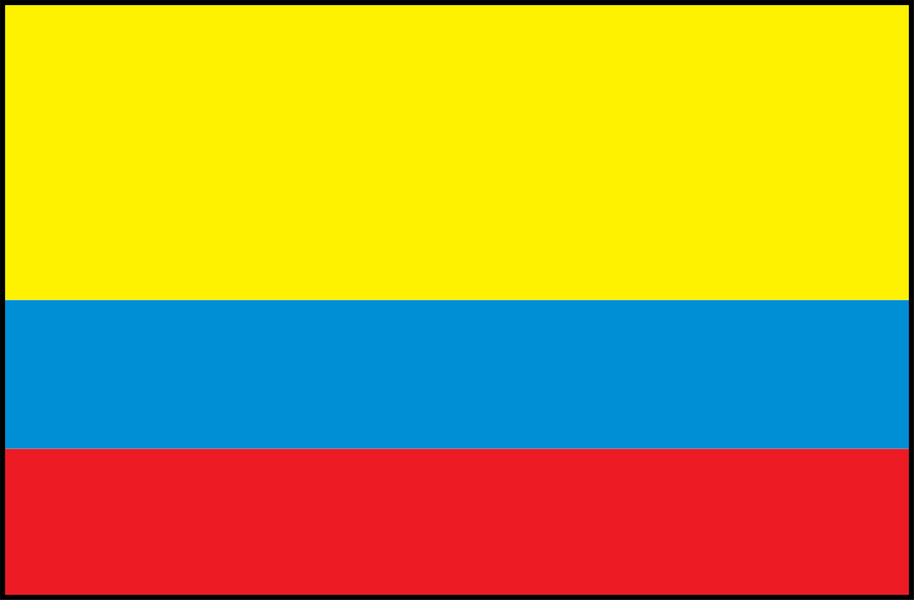
The flag of Colombia: three horizontal bands of yellow on top taking up half the flag, then blue and red in equal quarters below.ColombiaColombia is the only South American country with both Caribbean and Pacific coasts. It has more bird species than any other nation and is famous for its coffee and its emeralds.
Capital city
Bogota
Population
about 52,000,000
Area
1,141,748 km2
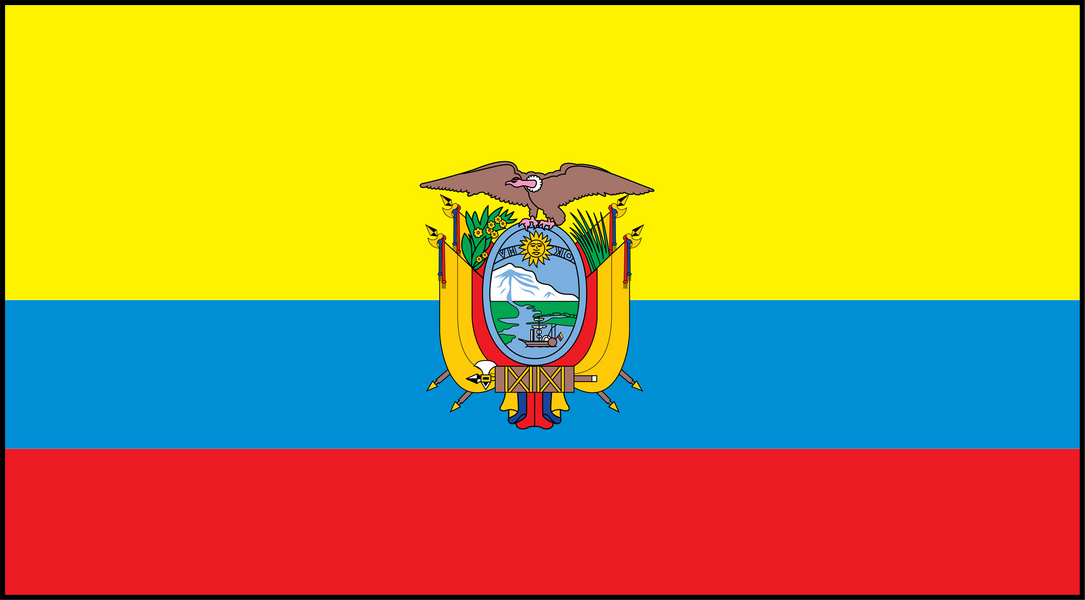
The flag of Ecuador: a yellow band across the top half, then blue and red bands below, with the coat of arms and a condor in the centre.EcuadorEcuador is a small South American country on the equator, with Pacific coast, Andean volcanoes and Amazon rainforest, plus the Galapagos Islands 900 km offshore.
Capital city
Quito
Population
about 18,000,000
Area
276,841 km2
The flag of Guyana: a green field with a yellow arrowhead pointing right, edged in white, and a red triangle at the hoist edged in black.GuyanaGuyana is the only English-speaking country in South America. Most people live on a low coastal strip, while around 85 per cent of the country remains rainforest.
Capital city
Georgetown
Population
about 800,000
Area
214,969 km2
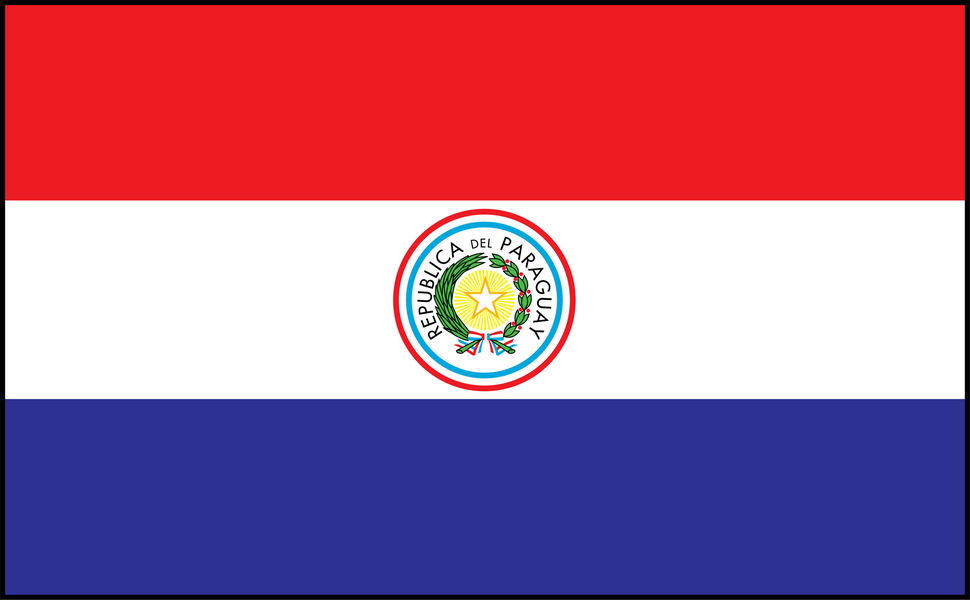
The flag of Paraguay: three horizontal bands of red, white and blue, with the national coat of arms in the centre on the front side.ParaguayParaguay is a landlocked South American country split by the Paraguay River. Most people speak the Indigenous Guarani language, and its flag is different on each side.
Capital city
Asuncion
Population
about 6,900,000
Area
406,752 km2
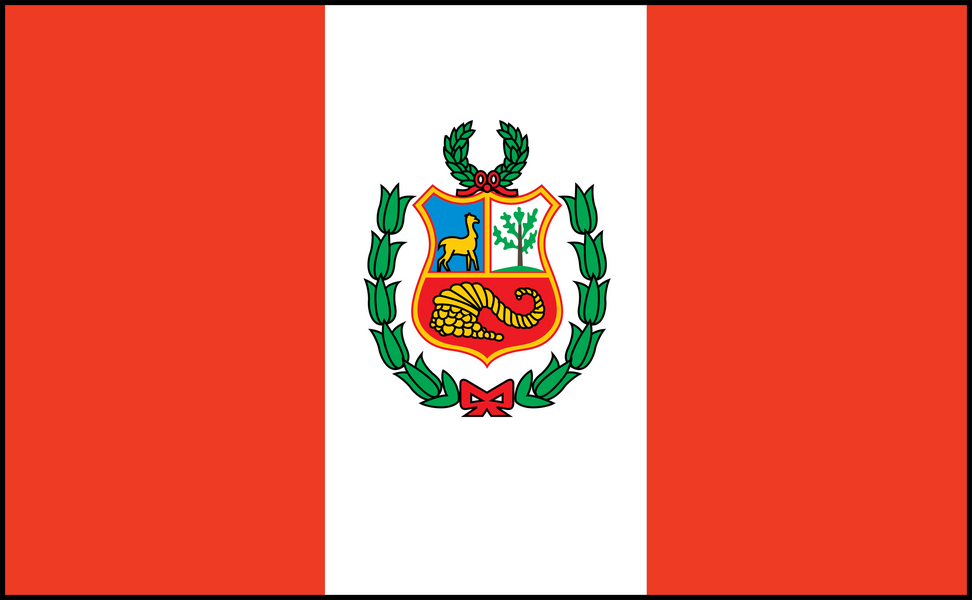
The flag of Peru: three vertical bands of red, white and red, with the national coat of arms in the centre of the white band.PeruPeru is a South American country of desert coast, Andean mountains and Amazon rainforest. It was the heart of the Inca empire and is home to Machu Picchu.
Capital city
Lima
Population
about 34,000,000
Area
1,285,216 km2
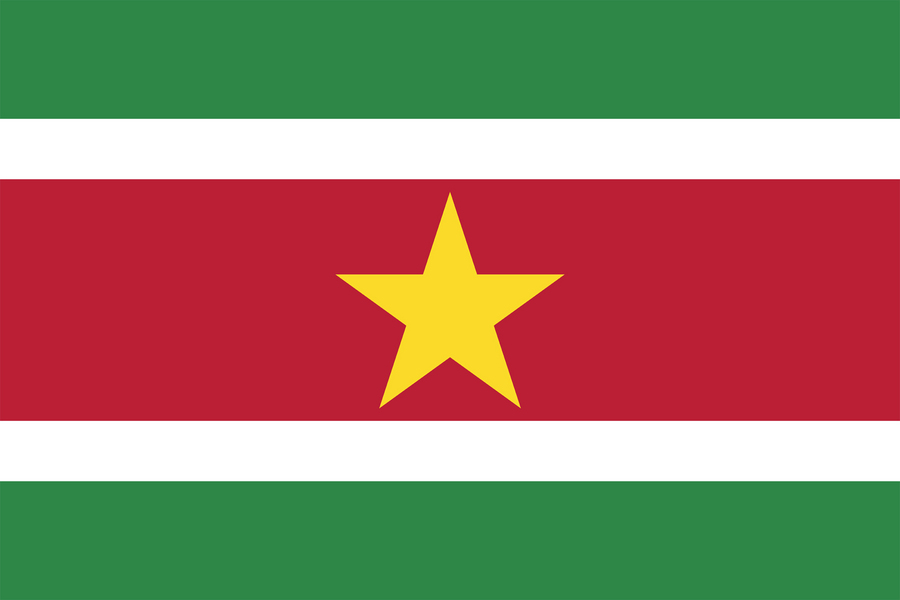
The flag of Suriname: horizontal bands of green, white, red, white and green, with a large yellow five-pointed star in the centre.SurinameSuriname is the smallest country in South America and the only Dutch-speaking one. Around 93 per cent of it is rainforest, and its population is exceptionally diverse.
Capital city
Paramaribo
Population
about 620,000
Area
163,820 km2
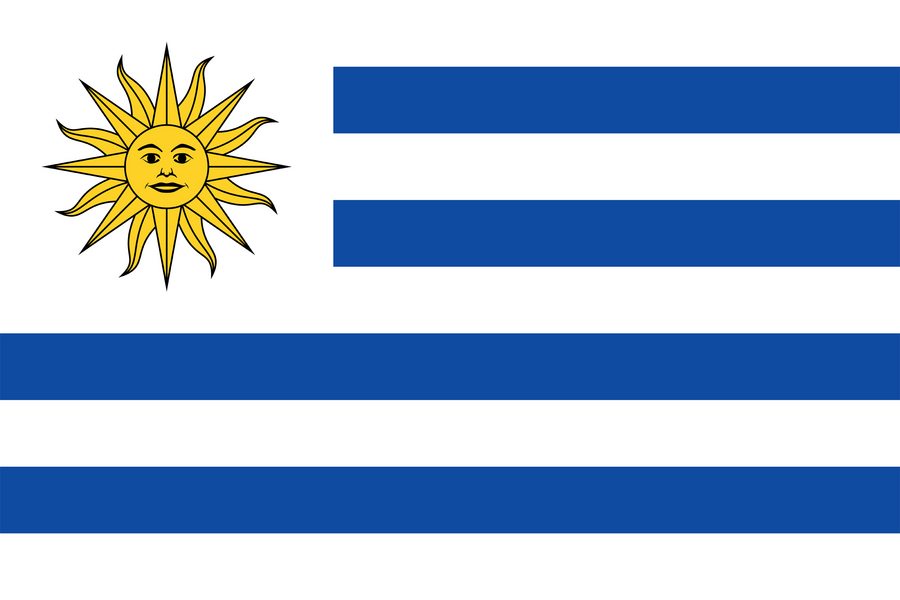
The flag of Uruguay: nine alternating white and blue horizontal stripes, with a golden Sun of May face in a white square in the top left.UruguayUruguay is a small, flat, grassy country on the Atlantic coast of South America. It won the first football World Cup and is known for cattle ranching and political stability.
Capital city
Montevideo
Population
about 3,400,000
Area
181,034 km2
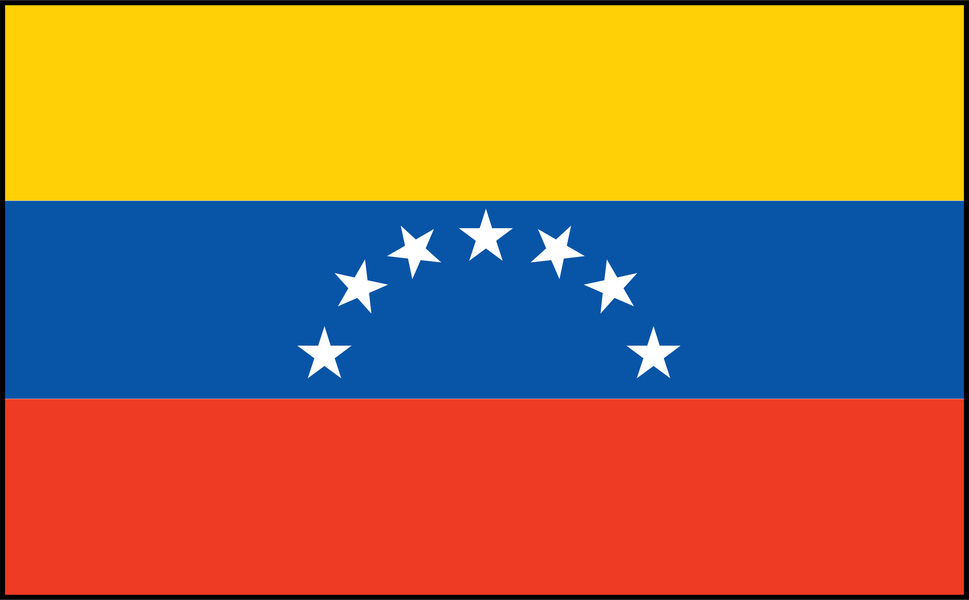
The flag of Venezuela: three horizontal bands of yellow, blue and red, with an arc of eight white stars across the blue band.VenezuelaVenezuela lies on the northern coast of South America. It has the world's tallest waterfall at Angel Falls, the flat-topped tepui mountains, and the largest oil reserves on Earth.
Capital city
Caracas
Population
about 28,000,000
Area
916,445 km2