
Tuvalu
Tuvalu is so low and so small that it earns a large share of its national income from renting out its internet address: .tv.
- CapitalFunafutiA ribbon of land around a wide lagoon
- PopulationAbout 11,000Fourth smallest country in the world
- Area26 km2Nine islands, none more than 5 m high
- Internet suffix.tvRented to broadcasters worldwide
Tuvalu is nine tiny coral islands and atolls halfway between Australia and Hawaii. The land totals just 26 km2 and nothing rises more than about 5 m above the sea, which makes Tuvalu perhaps the country most at risk from rising oceans anywhere on Earth.
When internet addresses were handed out, Tuvalu was given .tv. Television companies around the world want that ending, so Tuvalu leases it out, and the fees have at times funded a large slice of the government budget.
National symbols
- National colours Light blue, yellow and white
- National anthem Tuvalu mo te Atua (Translation: Tuvalu for the Almighty)
- National day Independence Day, 1 October
- National plant Coconut palm
Map of Tuvalu
Geography
Tuvalu has 26 km2 of land spread across nine islands in the central Pacific, with no land borders. Six are true atolls with lagoons and three are single reef islands.
The highest natural point is only about 5 m above sea level, and much of the land is a strip of coral sand a few dozen metres wide. Funafuti atoll encloses a lagoon far larger than all the country's land put together.
Climate
Tuvalu is tropical and warm all year, generally 26C to 32C, with the ocean keeping temperatures very steady.
The wetter months run from November to April, which is also cyclone season. Because the islands are so low, king tides now flood parts of Funafuti even on clear days, pushing sea water up through the porous coral ground.
Culture
Tuvaluan and English are the official languages, and Tuvaluan, a Polynesian language, is what people speak at home.
Nearly everyone belongs to the Church of Tuvalu. Community life centres on the maneapa, the island meeting hall, and on fatele, a form of dance and song where a group sings while others beat rhythm on a wooden box.
Economy
Tuvalu has almost no exports. Copra and a little fish leave the islands, and most families grow coconuts, pulaka and breadfruit for themselves.
The country runs on three things instead: the .tv domain fees, fishing licences sold to foreign tuna fleets, and money sent home by Tuvaluan sailors working on foreign merchant ships.
The flag
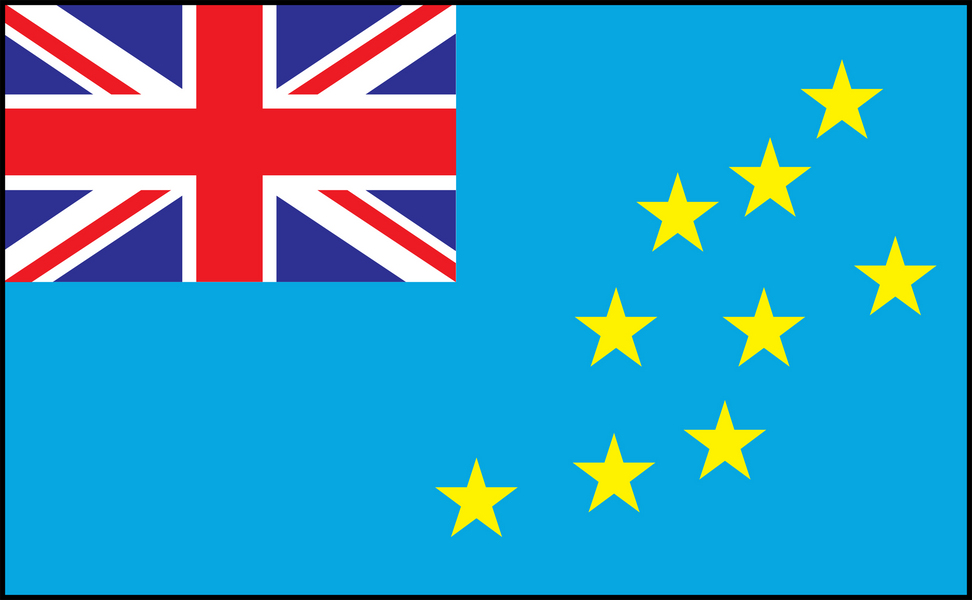
The flag is light blue with the British Union Flag in the top left corner, from Tuvalu's time under British rule.
Nine yellow stars are scattered across the blue, one for each island, and they are laid out roughly in the same pattern and position as the islands themselves. The flag is effectively a simple map of the country.