Tonga

Population facts The population of this Oceanian country is somewhere in the region of 108,020 people. The majority of Tonga's inhabitants reside in Nukualofa which is the country's most populous city. Tonga has a low population when compared to most other countries across the world, its overall population density is approximately 139 people per sq km. The estimated population of Oceania (region) is approximately 39,331,000 inhabitants, making it the continent with the smallest population in the world (excluding Antarctica). The continents in order of population, starting with highest population first, are: Asia, Africa, North America, South America, Europe, Australia (Oceania Region) and Antarctica. The total population of the entire world is in excess of 7.6 billion people.

Capital & major cities The capital of Tonga is Nukualofa. The names of other major cities located in this country are Neiafu, Haveluloto, Vaini, Pangai and ‘Ohonua.

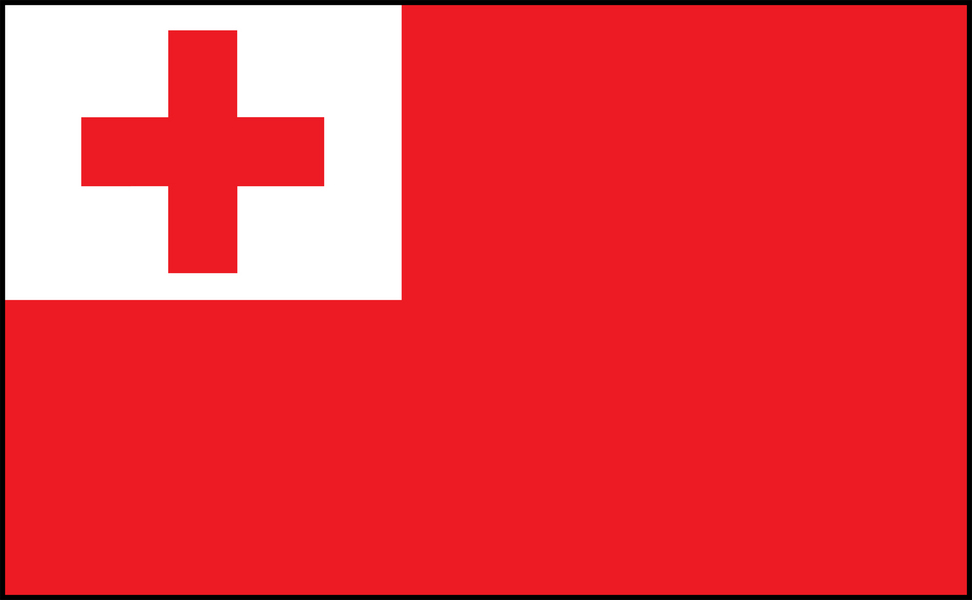
National symbol(s): red cross on white field, arms equal length

National colors: red and white

National Anthem/Song: Ko e fasi `o e tui `o e `Otu Tonga (Translation: Song of the King of the Tonga Islands)

National Holiday(s): Official Birthday of King TUPOU VI, 4 July (1959); Constitution Day, 4 November (1875)

National Motto(s): Ko e ʻOtua mo Tonga ko hoku tofiʻa (Tongan

Map of Tonga

Geography

Tonga forms part of the continent of Oceania (region), it is classed as an island country and is situated in the Pacific Ocean in Central Oceania (region). There are seven continents in the world: Asia, Africa, North America, South America, Europe, Antarctica, Australia (Oceania). Australia (plus Oceania) is the smallest continent in the world, it has 14 countries, stretches across a total area size of 9,008,500 km2 and forms 5.9% of the landmass of the world. Oceania is a geographical region that includes the continent of Australia. The continent of Australia comprises of mainland Australia, Tasmania, New Guinea, New Britain, and numerous small adjacent islands. New Zealand is not located on the continent of Australia. However, Australasia is a region of Oceania that includes New Zealand, Australia and Melanesia. Many of the Pacific island countries are located in subregions of Oceania. The subregions are defined as Micronesia, Melanesia and Polynesia. Tonga is an island country that spans across a total area of approximately 747 km2. It is a small island country formed of an archipelago of islands which are spread across the southern Pacific Ocean within an area of around 700,000 km2.

The following details provide a guide to Tonga's approximate border lengths:
Coastline 419 km.

Climate

Tonga has a hot tropical climate that is moderated by trade winds. The hottest months occur from December to May and the coolest months from May to December. The geography of Tonga is formed of an archipelago of approximately 171 islands of which around a quarter are inhabited. The three main island groups are called Vava'u, Ha'apai, and Tongatapu which is the largest of the islands and the location of the country's capital city, Nuku'alofa. The formation of the islands consist mainly of limestone base that is the result of uplifted coral formation, or limestone overlying volcanic rock. The islands are relatively flat for the most part. The lowest point of Tonga is the Pacific Ocean at 0m, and the highest point of elevation is Kao Volcano on Kao Island at 1,046m.

Culture

The official languages of Tonga are English and Tongan which are spoken by the majority of the population.

The main religion of Tonga is Protestant at approximately 64% of the population, with the major religion being the Free Wesleyan Church, followed by the Free Church of Tonga. Around 16% are Mormon and 15% Roman Catholic. The remaining population either belongs to other religions or no religion at all.

Economy

Natural resources can be defined as materials and substances that occur naturally on Earth. Natural resources are very important across the world, and can be exploited for economic gain. The level of natural resources present in an individual country depends on varying factors which are influenced by the geography, climate and location of that country. Some countries, such as Russia, The United States, Saudi Arabia and Canada, have many natural resources, where as some other countries have limited to none. Food, construction and transport are three primary examples of uses of natural resources. The following information provides examples of these uses: fish occurs naturally in streams, rivers, lakes and oceans, and can be caught for food consumption. Wood/timber can be extracted from forests for construction purposes, i.e. to build homes and furniture. Crude oils can be refined into different kinds of fuels in order to power vehicles/cars. The natural resources of Tonga include fish, and arable land suitable for growing crops.

The flag

Each country has its own individual culture, history and identity. Flags, emblems, symbols, colors, anthems, songs and mottos represent the national pride and identity of countries across the globe. These national symbols are created through the unique history of a nation and can portray both hardship and prosperity, embodying freedom, strength and unity. Flags, emblems, songs, mottos and colors reflect the past, present and future hopes of a country, and create an important image to the rest of the world. National symbols can include a mixture of things that are symbolic to a nation such as wildlife, plants, geographical features, crops, tools of agriculture, and tools of war. The following facts depict some of the national symbols, songs and colors that are important to Tonga: