
Solomon Islands
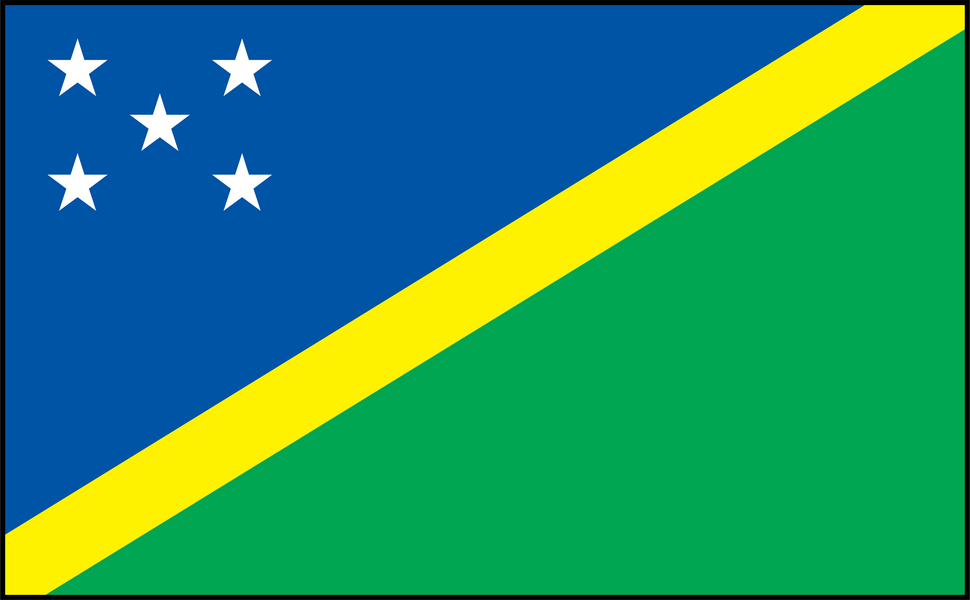
The Solomon Islands are a chain of six big volcanic islands and around 900 smaller ones, strung out across the south-western Pacific.
- CapitalHoniaraOn Guadalcanal island
- PopulationAbout 740,000Spread over roughly 350 inhabited islands
- Area28,896 km2Land only, the sea area is far bigger
- LanguagesOver 70 spokenEnglish is official, Pijin is the everyday link
The islands run in a double chain for about 1,500 km. The larger ones, including Guadalcanal, Malaita and New Georgia, are steep, forested and volcanic. Between and beyond them lie hundreds of tiny coral islands and reefs.
Guadalcanal was the site of some of the fiercest fighting of the Second World War in the Pacific. Sunken warships and aircraft still lie in the channel off Honiara, which divers now call Iron Bottom Sound.
National symbols
- National bird Sanford's sea eagle
- National colours Blue, green, yellow and white
- National anthem God Save Our Solomon Islands
- National day Independence Day, 7 July
Map of Solomon Islands
Geography
The Solomon Islands cover 28,896 km2 of land east of Papua New Guinea, with no land borders. The country stretches across roughly 1,500 km of ocean.
The largest islands are volcanic and mountainous, rising to Mount Popomanaseu at 2,335 m on Guadalcanal, and are covered in dense rainforest. The country sits on the Ring of Fire, so earthquakes, active volcanoes and tsunamis are all real risks.
Climate
The climate is hot, humid and wet nearly all year, with temperatures usually between 25C and 32C and little change between seasons.
Rainfall is heavy, over 3,000 mm a year in many places. The wetter months run from November to April, which is also when tropical cyclones are most likely.
Culture
English is the official language but almost nobody uses it at home. Solomon Islands Pijin is the language people actually share, on top of more than 70 local languages.
Most people are Christian, following missionaries who arrived in the 1800s, though traditional beliefs about ancestors remain woven in. Life is organised around the wantok system, where you look after people who speak your language.
Economy
Timber from the rainforest has been the main export for years, which has caused serious arguments about how fast the forests are being cut down.
Fish, especially tuna, is the other big earner, along with palm oil, cocoa and copra. Most families still grow taro, yams and sweet potato for themselves rather than buying food.
The flag
A thin yellow stripe runs diagonally across the flag from bottom left to top right, standing for the sun. Above it the field is blue for the ocean and rain, and below it green for the land and forests.
Five white stars sit in the blue corner. They originally stood for the five districts the country had at independence in 1978, though there are more provinces now.