
Nauru
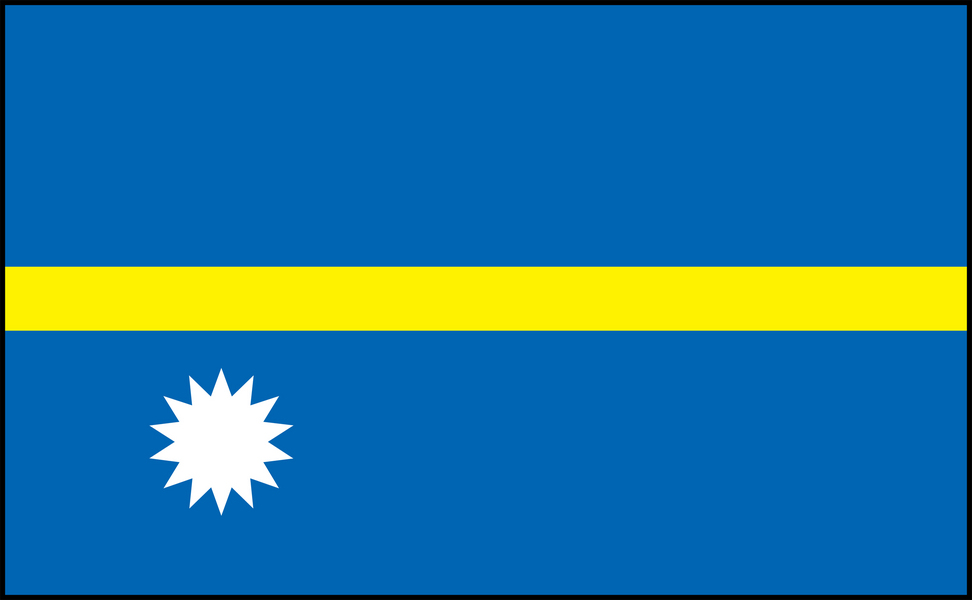
Nauru is the smallest island country in the world, and for a short time in the 1970s its people were among the richest on Earth because of bird droppings.
- CapitalNo official capitalGovernment offices sit in Yaren district
- PopulationAbout 12,500One of the smallest nations anywhere
- Area21 km2You can drive around the whole island in 30 minutes
- CurrencyAustralian dollarNauru has never issued its own
Nauru is a single oval island near the equator, just 21 km2. A narrow fertile ring runs around the coast, where everyone lives, and the raised middle of the island is a wasteland of bare limestone pinnacles.
That wasteland is what is left after phosphate mining. Seabirds roosted on Nauru for thousands of years and their droppings built up into thick phosphate rock, an excellent fertiliser. Digging it out made Nauru extraordinarily wealthy, and then it ran out, leaving four fifths of the island stripped and unusable.
National symbols
- National bird Nauru reed warbler, found nowhere else
- National colours Blue, yellow and white
- National anthem Nauru Bwiema (Translation: Nauru, Our Homeland)
- National day Independence Day, 31 January
Map of Nauru
Geography
Nauru is a single raised coral island of 21 km2 in the central Pacific, just south of the equator, with no land borders. Its nearest neighbour, Banaba in Kiribati, is 300 km away.
A coral reef surrounds the island and a sandy beach ring, called the bottomside, holds all the housing, the airport and the single road. The raised interior, the topside, reaches 65 m and is now a maze of limestone pinnacles left behind by mining.
Climate
Nauru is hot and humid all year, typically 25C to 35C, with sea breezes providing the only relief.
Rainfall is unreliable. Monsoon rains arrive between November and February, but Nauru also suffers long droughts, and the bare mined interior reflects so much heat that it may reduce rainfall further.
Culture
Nauruan is the national language and English is used for government and business. Nauruan is unusual: it is a Micronesian language but does not closely resemble any of its neighbours.
Almost everyone is Christian. A traditional sport involves catching noddy birds in flight with a lasso at dusk, and Australian rules football is the most popular modern sport.
Economy
Phosphate was everything and is now nearly gone. What remains is mined in small quantities, but the wealth of the 1970s was largely lost through bad investments.
Today Nauru earns money mainly by hosting an Australian immigration detention centre, by selling fishing licences for its ocean waters, and through aid from Australia and Taiwan.
The flag
The flag is deep blue with a narrow gold stripe running straight across the middle, and a white 12-pointed star below the stripe on the left.
It is a map. The blue is the Pacific Ocean, the gold stripe is the equator, and the star sits just below it exactly where Nauru sits just south of the equator. The 12 points stand for the island's 12 original tribes.