
Barbados
Barbados is the most easterly island in the Caribbean, and in 2021 it removed the British monarch as head of state to become a republic.
- CapitalBridgetownIts historic centre is a World Heritage Site
- PopulationAbout 282,000One of the most densely populated countries anywhere
- Area430 km2Around 34 km long and 23 km wide
- Became a republic2021After 396 years linked to the British Crown
Barbados sits about 160 km east of the main chain of Caribbean islands, out in the Atlantic. Unlike its volcanic neighbours it is made of coral limestone built up on a rising ridge, so it is relatively flat and its water filters clean through the rock.
Sugar cane shaped Barbados for three centuries, worked by enslaved Africans brought by the British. In November 2021 the country removed the British monarch as head of state and became a republic, with its own president.
National symbols
- National bird Pelican
- National flower Pride of Barbados, a red and yellow flower
- National anthem In Plenty and In Time of Need
- National day Independence Day, 30 November
Map of Barbados
Geography
Barbados covers 430 km2 and has no land borders, lying in the Atlantic about 160 km east of the Windward Islands.
The island is mostly flat with gently rising terraces of coral limestone, reaching Mount Hillaby at 340 m. Because rainwater sinks straight through the porous coral rock, Barbados has almost no rivers but plenty of underground caves, including the spectacular Harrison's Cave.
Climate
Barbados is tropical, warm all year at around 24C to 30C, and cooled by steady Atlantic trade winds that make it feel less humid than many Caribbean islands.
The wet season runs June to November, which is hurricane season, though the island's easterly position means it is missed more often than most of the Caribbean.
Culture
English is the official language, and Bajan Creole is spoken everywhere informally. Barbadians call themselves Bajans.
Crop Over, which began as a harvest festival at the end of the sugar cane season, is now a Carnival lasting several weeks and ending with Grand Kadooment. Around 79 per cent of Bajans are Christian. Cricket is the national sport, and Barbados has produced some of the greatest players ever to play the game.
Economy
Tourism is the largest industry, followed by international business and financial services.
Sugar and rum are still exported but on a much smaller scale than in the past. Barbados has one of the highest standards of living and literacy rates in the Caribbean.
The flag
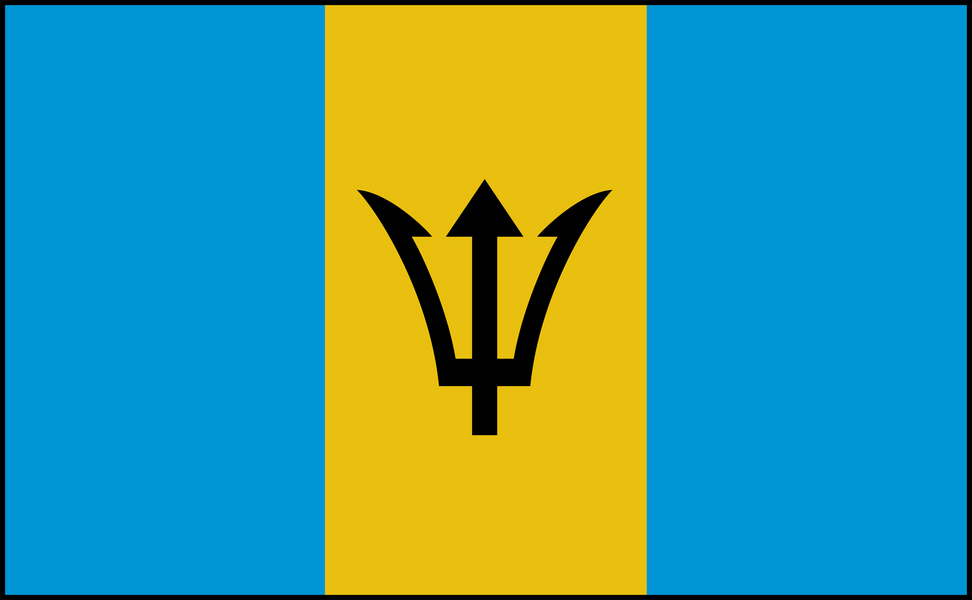
Three vertical bands: ultramarine blue on each side and gold in the middle. Blue stands for the sea and sky, and gold for the sand of the beaches.
In the centre is a black trident head, broken off its shaft. The full trident appeared on the colonial badge, held by Britannia, and the broken shaft marks the deliberate break from colonial rule. Its three prongs stand for government of, for and by the people.