
Spain
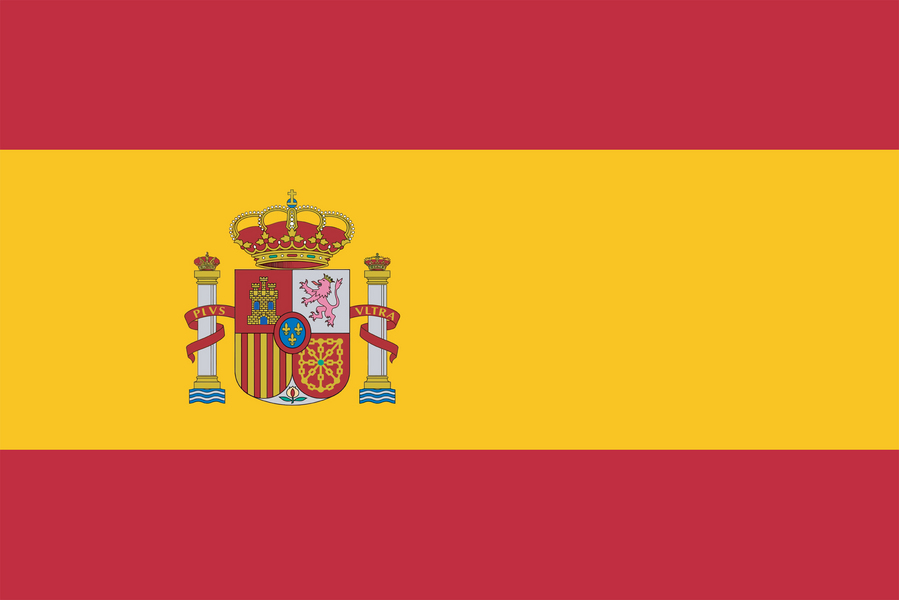
Spain has more bars per person than any other country in Europe, and its language is spoken by around 500 million people worldwide.
- CapitalMadridThe highest capital city in the European Union
- PopulationAbout 48 millionAcross 17 autonomous regions
- Area505,990 km2Second largest country in the EU
- Spanish speakersAbout 500 millionSecond most spoken first language on Earth
Spain occupies most of the Iberian Peninsula, cut off from the rest of Europe by the Pyrenees. Much of the interior is a high dry plateau called the Meseta, ringed by mountains, which is why Madrid sits around 650 m above sea level.
For nearly 800 years, much of Spain was ruled by Muslim kingdoms from North Africa. They left behind the Alhambra in Granada and the Mezquita in Cordoba, and thousands of Spanish words that begin with "al" come from Arabic.
National symbols
- National animal Bull, and the Spanish imperial eagle
- National colours Red and yellow
- National anthem Marcha Real (Translation: Royal March), which has no words
- National day Fiesta Nacional, 12 October
Map of Spain
Geography
Spain covers 505,990 km2 and borders France, Andorra, Portugal, Gibraltar and Morocco (at the enclaves of Ceuta and Melilla), with the Atlantic Ocean and the Mediterranean Sea around it.
The Meseta plateau fills the middle, ringed by mountains. The Pyrenees close off the north, and the Sierra Nevada in the south holds mainland Spain's highest peak, Mulhacen, at 3,479 m. The Canary Islands, off Africa, hold Teide at 3,715 m, the highest point in all Spanish territory.
Climate
Spain has three main climates. The Mediterranean coast has hot dry summers and mild winters. The northern Atlantic strip, sometimes called Green Spain, is wet and mild all year and looks more like Ireland.
The central Meseta is the extreme one: baking hot in summer, above 40C in Seville and Cordoba, and cold in winter. Parts of Almeria in the south-east are semi-desert, dry enough to have been used as a film set for westerns.
Culture
Spanish, also called Castilian, is the official language nationwide. Catalan, Galician and Basque are co-official in their regions, and Basque is unrelated to any other known language on Earth.
Flamenco, from Andalusia, combines guitar, singing, handclaps and dance. Football is the dominant sport, and Real Madrid and Barcelona are among the most famous clubs in the world. Around 56 per cent of Spaniards are Catholic and around 39 per cent report no religion.
Economy
Tourism is enormous: Spain is usually the second most visited country in the world after France, drawing around 85 million visitors a year to its beaches and cities.
Spain is also the world's largest producer of olive oil, a major exporter of wine, citrus and vegetables, and a leader in wind and solar power. Cars and car parts are its biggest manufactured export.
The flag
A wide yellow band between two narrower red bands, in a ratio of one to two to one. The colours were chosen in 1785 by King Charles III, who wanted a naval flag that could be recognised from a long way off at sea.
The coat of arms on the yellow band combines the emblems of the old Spanish kingdoms: Castile, Leon, Aragon, Navarre and Granada. Beside it stand the Pillars of Hercules, the rocks either side of the Strait of Gibraltar.