
Serbia
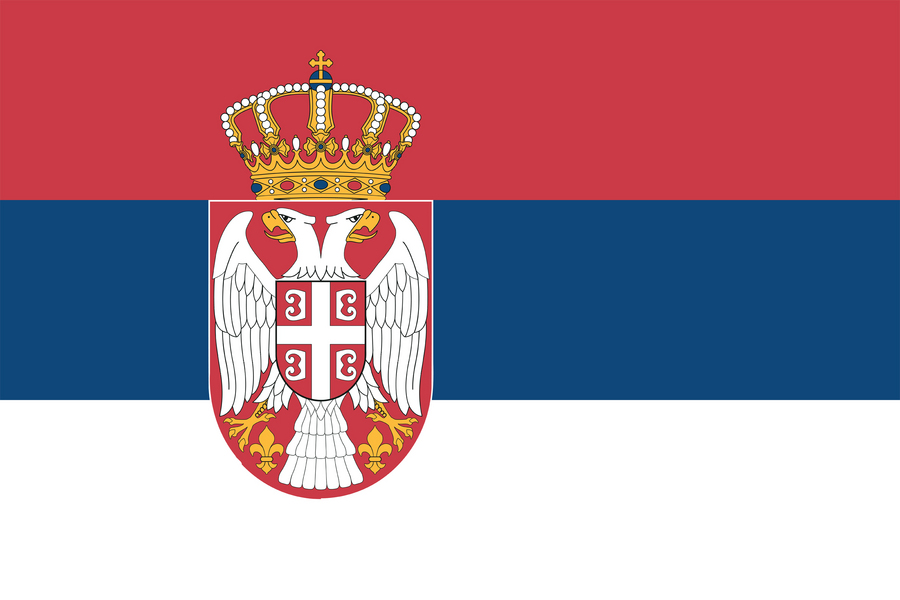
Serbia is landlocked in the middle of the Balkans, and the Danube runs 588 km across it, more than through any other country except Romania.
- CapitalBelgradeWhere the Sava meets the Danube
- PopulationAbout 6.6 millionLandlocked since Montenegro left in 2006
- Area88,499 km2Including the disputed Kosovo region
- Danube588 km through SerbiaA major shipping route
Serbia lies at the crossroads of central and south-eastern Europe. The north is the flat, fertile Vojvodina plain, part of the Pannonian Basin, while the south and east rise into hills and mountains.
Belgrade sits on a ridge where the Sava flows into the Danube, which made it strategically vital. The city has been fought over and destroyed more than 40 times in its history, and the Kalemegdan fortress still overlooks the meeting of the two rivers.
National symbols
- National animal Grey wolf
- National flower Natalie's ramonda, a flower that can revive after drying out completely
- National anthem Boze pravde (Translation: God of Justice)
- National day Statehood Day, 15 February
Map of Serbia
Geography
Serbia covers 88,499 km2 and borders Hungary, Romania, Bulgaria, North Macedonia, Croatia, Bosnia and Herzegovina, Montenegro and Albania. It is landlocked.
The northern Vojvodina region is flat and fertile. South of the Danube and Sava the land rises into the Dinaric Alps and the Balkan and Carpathian ranges, reaching Midzor at 2,169 m. The Iron Gates gorge on the Danube is one of the largest in Europe.
Climate
Serbia has a continental climate in the north, with cold winters and hot summers, and a more moderate mountain climate in the south.
Belgrade averages around 1C in January and 23C in July. A strong cold winter wind called the kosava blows down the Danube valley. Rainfall is moderate and higher in the mountains.
Culture
Serbian is the official language and is unusual in using both the Cyrillic and Latin alphabets interchangeably, with Cyrillic the official script.
Serbian Orthodox monasteries, several of them World Heritage Sites, hold some of the finest medieval frescoes in Europe. The trumpet festival at Guca draws hundreds of thousands of people. Around 85 per cent of Serbs are Orthodox Christian.
Economy
Serbia has a mixed economy with car manufacturing, machinery, food processing and a fast-growing IT and software sector.
The Vojvodina plain is one of the most productive farming regions in the Balkans, producing maize, wheat, sugar beet and sunflowers. Raspberries are a notable export: Serbia is one of the largest producers in the world.
The flag
Three horizontal bands of red, blue and white, the pan-Slavic colours also used by Russia, Slovakia and Slovenia, arranged in Serbia's own order.
Towards the flagpole sits the coat of arms: a white double-headed eagle on a red shield, above a smaller shield with a cross and four Cyrillic letter S shapes, which stand for a motto meaning "Only Unity Saves the Serbs".