
San Marino
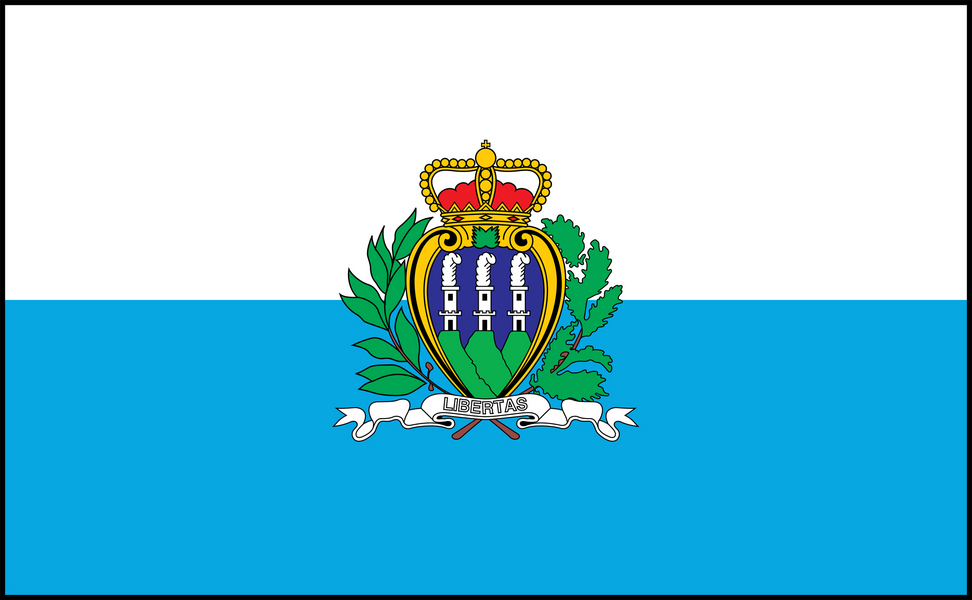
San Marino claims to be the oldest republic in the world, founded in the year 301 by a stonemason hiding from persecution.
- CapitalSan MarinoPerched on Mount Titano
- PopulationAbout 34,000Completely surrounded by Italy
- Area61 km2Fifth smallest country in the world
- FoundedTraditionally 301 ADThe oldest surviving republic
San Marino is a tiny landlocked country entirely surrounded by Italy, sitting on and around Mount Titano in the Apennines near Rimini. Three medieval towers stand along the mountain ridge and are the national emblem.
Tradition says a Christian stonemason named Marinus fled persecution and founded a community here in 301 AD. San Marino has been an independent republic ever since, making it the oldest surviving sovereign republic in the world.
National symbols
- National colours White and light blue
- National anthem Inno Nazionale della Repubblica, which has no words
- National day Foundation Day, 3 September
- National emblem Three towers on Mount Titano
Map of San Marino
Geography
San Marino covers 61 km2 and borders only Italy, which completely surrounds it. It is landlocked, though the Adriatic coast at Rimini is only about 10 km away.
The country sits on the north-eastern slopes of the Apennines. Mount Titano rises to 749 m and its three peaks each carry a fortified tower: Guaita, Cesta and Montale. The land falls away into rolling hills towards the Italian plain.
Climate
San Marino has a Mediterranean climate moderated by altitude, with warm summers around 20C to 30C and cool winters that occasionally bring snow to the summit.
Rainfall is moderate, heaviest in autumn and spring. The exposed ridge of Mount Titano can be noticeably windier and cooler than the surrounding Italian countryside.
Culture
Italian is the official language and the local Romagnol dialect is also spoken. Culturally San Marino is very close to the surrounding Emilia-Romagna region.
Around 97 per cent of Sammarinese are Catholic. The Crossbow Federation keeps medieval crossbow shooting alive with competitions in traditional costume. San Marino is a member of the UN and the Council of Europe but not of the European Union.
Economy
Tourism is central: around 2 million visitors a year come for the towers, the views and the duty-free shopping, which is around 60 times the population.
Banking and finance are important, and San Marino also earns money from selling collectible postage stamps and coins to collectors worldwide. Ceramics, furniture and clothing are manufactured locally.
The flag
A white band above a light blue band, with the national coat of arms in the centre. White stands for the snow on Mount Titano and blue for the sky and the nearby Adriatic.
The coat of arms shows the three towers of Mount Titano, each topped by an ostrich feather, framed by oak and laurel branches, with a crown above and the word LIBERTAS, meaning liberty, on a scroll below.