
Poland
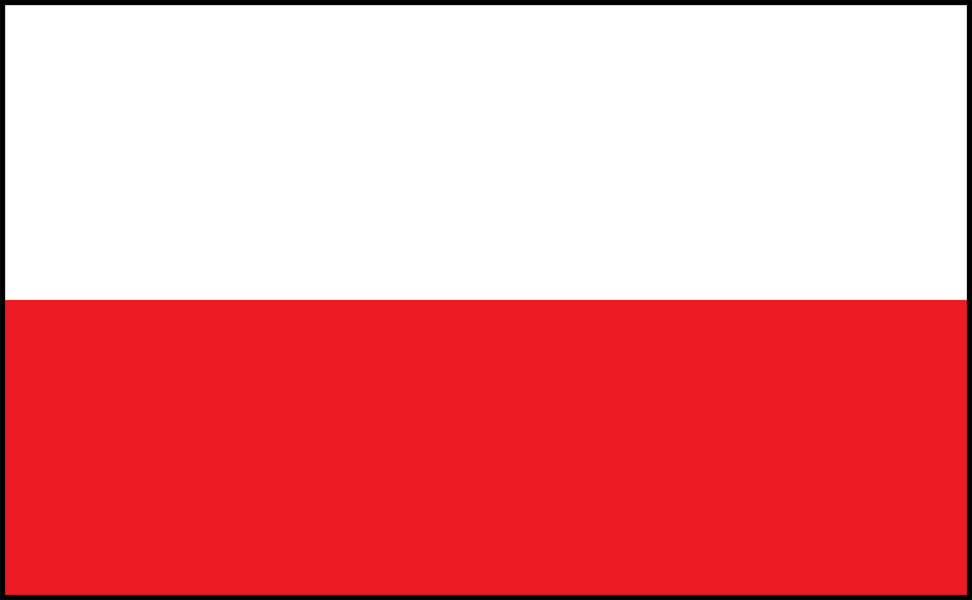
Poland has moved around the map more than almost any country in Europe, and for 123 years it did not appear on the map at all.
- CapitalWarsawRebuilt from photographs after the Second World War
- PopulationAbout 37 millionFifth most populous in the EU
- Area312,696 km2Ninth largest country in Europe
- Off the map1795 to 1918Partitioned between three empires
Poland sits on the great North European Plain, flat and open with few natural barriers, which is a large part of why it has been invaded so often. The Carpathian and Sudeten mountains guard the southern border, and the Baltic coast lies to the north.
In 1795 Poland was carved up between Russia, Prussia and Austria and vanished as a state for 123 years. It reappeared in 1918, was invaded again in 1939, and after the war its borders were shifted hundreds of kilometres west.
National symbols
- National animal White-tailed eagle
- National colours White and red
- National anthem Mazurek Dabrowskiego (Translation: Poland Is Not Yet Lost)
- National day Constitution Day, 3 May
Map of Poland
Geography
Poland covers 312,696 km2 and borders Germany, the Czech Republic, Slovakia, Ukraine, Belarus, Lithuania and Russia (the Kaliningrad enclave), with the Baltic Sea to the north.
Most of the country is low, flat plain. The south rises into the Sudeten and Carpathian mountains, with Rysy in the Tatras the highest point at 2,499 m. The Vistula is the longest river, running from the mountains to the Baltic at Gdansk. Bialowieza Forest on the Belarusian border is the last large area of primeval lowland forest in Europe and has wild bison.
Climate
Poland has a temperate climate that shifts from maritime in the west to continental in the east: the further east you go, the colder the winters and the hotter the summers.
Winters average around minus 1C to 4C, with snow common, and summers average about 18C to 25C. The mountains in the south get heavy snow and support a ski industry.
Culture
Polish is the official language and is spoken by around 97 per cent of the population, making Poland unusually monolingual by European standards.
Frederic Chopin was Polish, and so was Marie Curie, born Maria Sklodowska in Warsaw, who won Nobel Prizes in two different sciences. Nicolaus Copernicus worked out that Earth orbits the Sun here. Around 71 per cent of Poles are Catholic.
Economy
Poland has been one of the fastest-growing economies in Europe since 1990 and was the only EU country to avoid recession in the 2009 financial crisis.
Manufacturing is broad: cars and car parts, furniture (Poland is one of the world's biggest furniture exporters), electronics and food. Coal still supplies a large share of electricity, though that share is falling.
The flag
Two horizontal bands, white above and red below. The colours come from the Polish coat of arms, a white eagle on a red shield, used since the 1200s.
White stands for the eagle and for peace, and red for the field it sits on. The flag is nearly identical to Indonesia's and Monaco's but with the colours the other way up, which causes regular confusion at international events.