
Netherlands
About a quarter of the Netherlands lies below sea level, and much of the country is land the Dutch made themselves by pumping the sea out.
- CapitalAmsterdamThough the government sits in The Hague
- PopulationAbout 18 millionOne of the most densely populated countries in Europe
- Area41,850 km2A quarter of it below sea level
- BicyclesMore than peopleAround 23 million bikes
The Netherlands is famously flat. Its name means "low countries", and the lowest point is about 7 m below sea level. Dykes, dunes and a vast system of pumps and barriers keep the North Sea out.
The Dutch did not just defend land, they created it. Polders are areas of seabed or lake bed enclosed by dykes and pumped dry, originally by windmills. The province of Flevoland was entirely under water a century ago and now has towns, farms and around 440,000 people.
National symbols
- National animal Lion
- National flower Tulip
- National anthem Het Wilhelmus, the oldest national anthem in the world
- National day King's Day, 27 April
Map of Netherlands
Geography
The Netherlands covers 41,850 km2 and borders Germany and Belgium, with the North Sea to the north and west. Three Caribbean islands are also part of the country.
The land is exceptionally flat: the highest point on the mainland, the Vaalserberg, is only 322 m. The Rhine, Meuse and Scheldt rivers all reach the sea here, forming a huge delta. Around 17 per cent of the country's land area was reclaimed from the sea or lakes.
Climate
The Netherlands has a mild maritime climate, with cool summers around 17C to 22C and winters hovering near freezing. The sea keeps extremes away.
Rain falls throughout the year and wind is a constant, which is why the country has both historic windmills and a growing number of offshore wind farms. Hard frosts cold enough to skate on the canals have become rare.
Culture
Dutch is the official language, and Frisian is co-official in Friesland. The Dutch are among the most fluent English speakers in the world outside English-speaking countries.
The Netherlands produced Rembrandt, Vermeer and Van Gogh. Cycling is normal rather than sporty: the country has around 35,000 km of bike paths. Around 55 per cent of Dutch people report no religion, one of the highest figures in Europe.
Economy
The Netherlands is the second largest exporter of agricultural products in the world after the United States, despite its small size. It manages this through extremely efficient greenhouse farming.
Rotterdam is the largest port in Europe, and Schiphol one of its busiest airports, making the country a trade hub. ASML, based in Veldhoven, makes the machines that produce almost all the world's advanced computer chips.
The flag
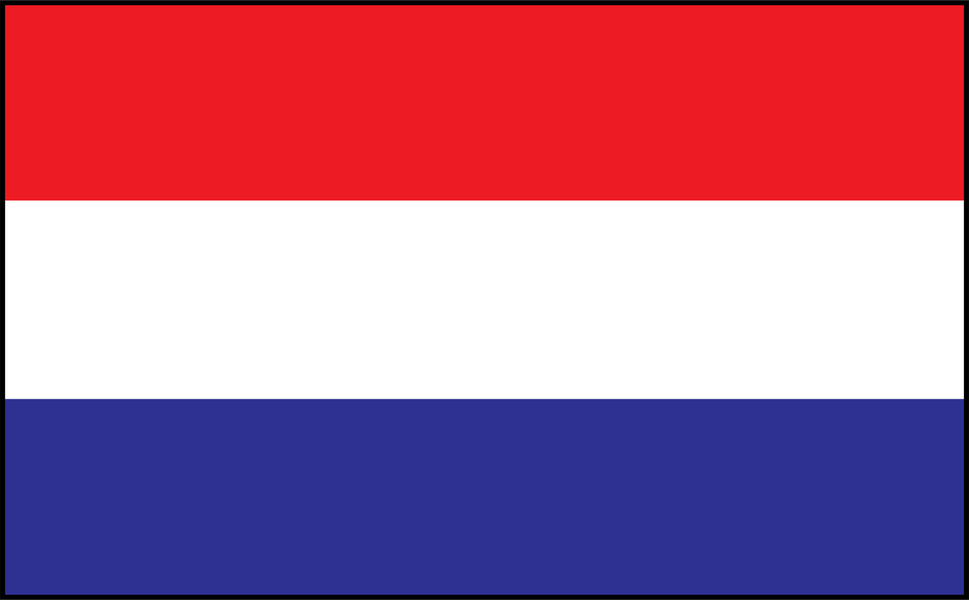
Three horizontal bands of red, white and blue. It is one of the oldest national flags still in use, dating back to the Dutch revolt against Spanish rule in the 1500s.
The original top band was orange, the colour of William of Orange who led the revolt, but orange dye faded to red at sea and red was easier to see, so red became standard. Orange is still the national colour, which is why Dutch sports crowds wear it.