
Lithuania
Lithuania has a hill covered with more than 100,000 crosses, planted by people despite repeated attempts to bulldoze it flat.
- CapitalVilniusHas one of the largest surviving medieval old towns in eastern Europe
- PopulationAbout 2.9 millionThe largest of the three Baltic states
- Area65,300 km2Mostly flat, forest and lakes
- AmberBaltic goldFossilised tree resin found on its beaches
Lithuania is the southernmost and largest of the three Baltic states. It is low and flat, with forests, around 3,000 lakes and a Baltic coastline including the Curonian Spit, a 98 km sandbar of enormous shifting dunes.
The Hill of Crosses near Siauliai is covered in crosses left by pilgrims, from tiny ones to several metres tall. Soviet authorities bulldozed it at least three times between 1961 and 1975, and people quietly replanted it each time. There are now well over 100,000.
National symbols
- National bird White stork
- National flower Rue
- National anthem Tautiska giesme (Translation: National Hymn)
- National day Independence Day, 16 February
Map of Lithuania
Geography
Lithuania covers 65,300 km2 and borders Latvia, Belarus, Poland and the Russian enclave of Kaliningrad, with a 99 km Baltic Sea coast.
The land is low and gently rolling, shaped by ice-age glaciers, with the highest point only 294 m. There are around 3,000 lakes and around a third of the country is forest. The Curonian Spit, shared with Russia, is a narrow sandbar with dunes up to 60 m high.
Climate
Lithuania has a climate between maritime and continental: cold winters with snow, and mild to warm summers around 20C to 25C.
The coast is milder than inland thanks to the Baltic Sea. Winters average around minus 3C but cold snaps can be much sharper, and the Curonian Lagoon usually freezes over.
Culture
Lithuanian is the official language and is one of the oldest living Indo-European languages, retaining features that Sanskrit and Latin had but that most modern languages lost.
Cross-crafting, the carving of wooden crosses and shrines, is on the UNESCO heritage list. Around 74 per cent of Lithuanians are Catholic. Basketball is effectively the national sport, and Lithuania is one of the strongest basketball nations in Europe.
Economy
Lithuania has a services and manufacturing economy: furniture, food processing, chemicals, lasers (it produces a notable share of the world's scientific lasers) and a fast-growing financial technology sector.
The port of Klaipeda is the country's trade gateway. Lithuania joined the EU in 2004 and adopted the euro in 2015.
The flag
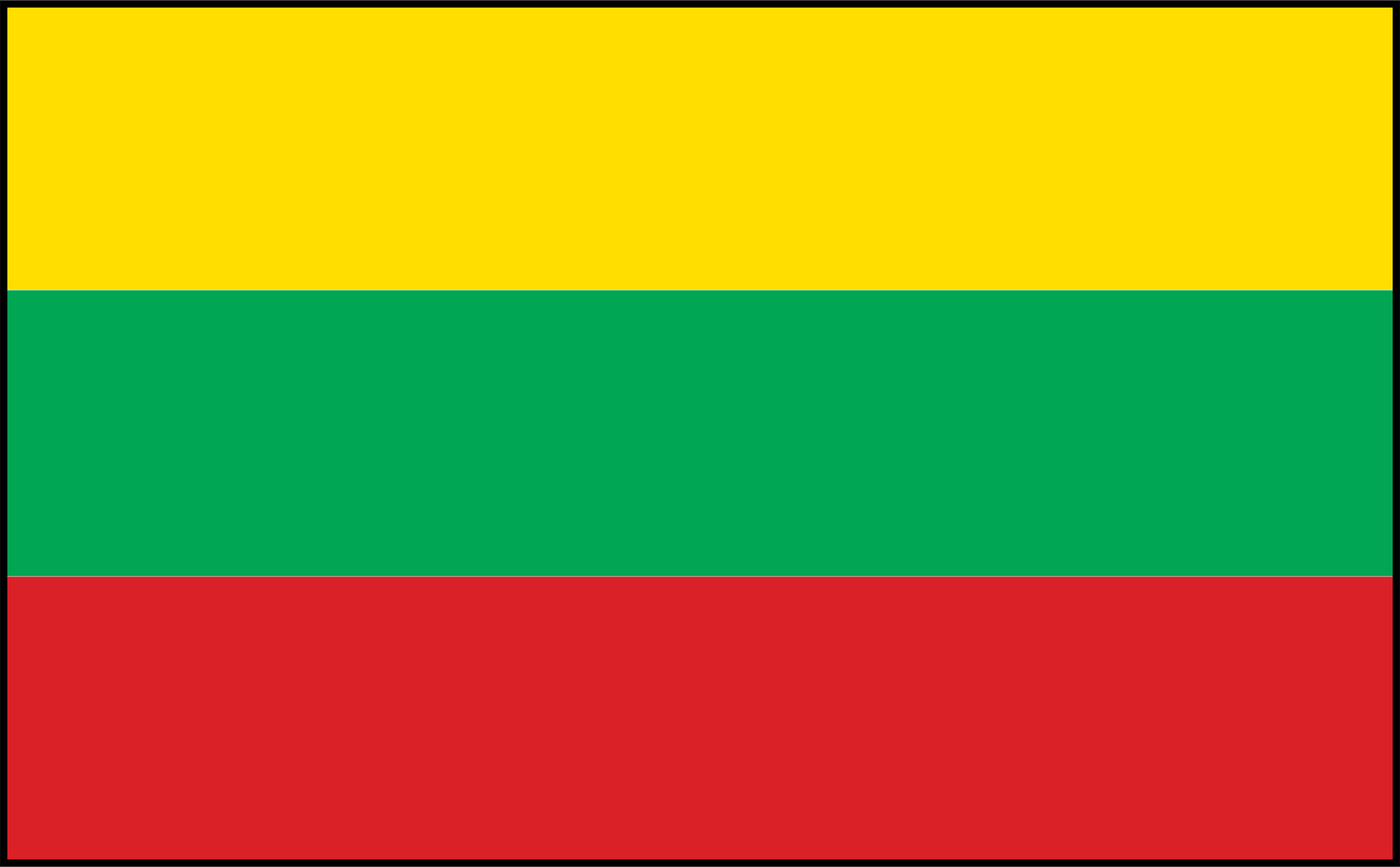
Three horizontal bands of yellow, green and red. Yellow stands for the sun, prosperity and the fields of ripening grain, green for the forests and the countryside, and red for the blood shed defending the nation.
The flag was first adopted in 1918, banned during Soviet rule, and restored in 1988 as independence approached. Lithuania also flies a historic state flag showing a white armoured knight on horseback, called the Vytis.