
Liechtenstein
Liechtenstein is one of only two doubly landlocked countries in the world, meaning you have to cross two borders to reach the sea.
- CapitalVaduzOverlooked by the prince's castle
- PopulationAbout 40,000One of the smallest in Europe
- Area160 km2Sixth smallest country in the world
- Doubly landlockedOne of only twoThe other is Uzbekistan
Liechtenstein is a narrow strip of Alpine land between Switzerland and Austria, with the Rhine along its western edge and mountains rising steeply to the east. It is only about 25 km long and 6 km wide.
Being doubly landlocked is a genuine rarity: Liechtenstein's neighbours, Switzerland and Austria, are themselves landlocked, so you must cross at least two borders to reach open sea. Only Uzbekistan shares that distinction.
National symbols
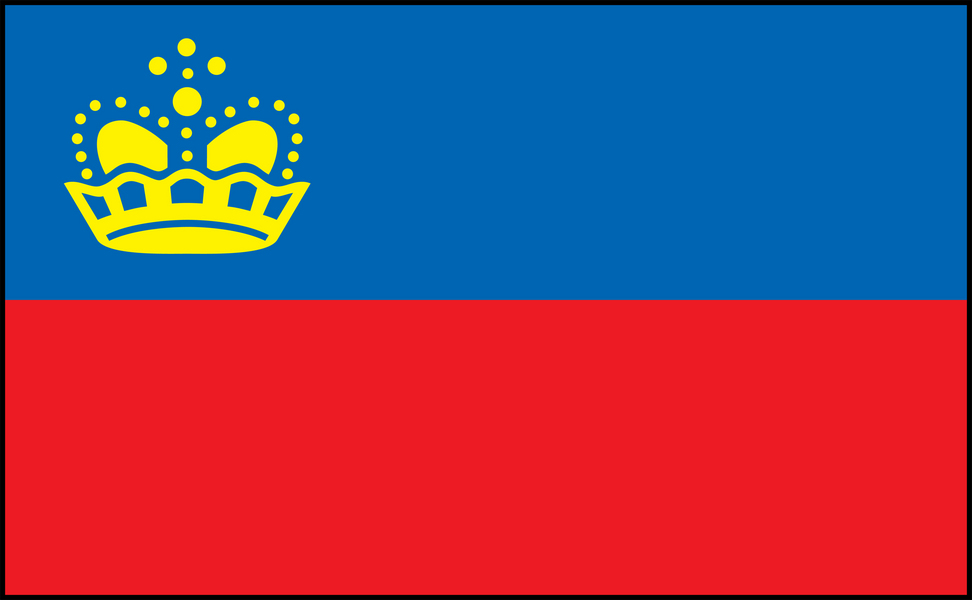
- National colours Blue and red
- National anthem Oben am jungen Rhein (Translation: High Above the Young Rhine)
- National day National Day, 15 August
- National emblem Princely crown
Map of Liechtenstein
Geography
Liechtenstein covers 160 km2 and borders only Switzerland and Austria. It is doubly landlocked, meaning both its neighbours are landlocked too.
The Rhine valley in the west holds the towns and farmland. East of it the land rises sharply into the Ratikon range of the Alps, reaching Grauspitz at 2,599 m. Around a third of the country is forest.
Climate
Liechtenstein has an alpine climate with cold winters and mild summers, moderated in the Rhine valley by a warm dry wind called the fohn that blows down from the mountains.
The valley averages around 0C in January and 20C in July, while the mountains are much colder and hold snow into spring, supporting a small ski area at Malbun.
Culture
German is the official language, spoken in an Alemannic dialect similar to that of eastern Switzerland and Vorarlberg in Austria.
Around 73 per cent of the population is Catholic. On National Day the prince invites the entire country to his castle garden for a party, which is possible because there are only about 40,000 people. Around a third of residents are foreign nationals.
Economy
Liechtenstein is highly industrialised for its size, with more jobs than residents: thousands of people commute in daily from Switzerland and Austria.
Precision manufacturing leads: dental products, power tools (Hilti is based here) and machinery. Financial services are also significant, and the country uses the Swiss franc and shares a customs union with Switzerland.
The flag
A blue band above a red band, with a gold princely crown in the upper corner nearest the flagpole. Blue stands for the sky and red for the glowing fires of the evening hearth.
The crown was added in 1937 for a practical reason: at the 1936 Berlin Olympics, Liechtenstein discovered its flag was identical to Haiti's. The crown, symbolising the unity of the people and their prince, has distinguished it ever since.