
Kosovo
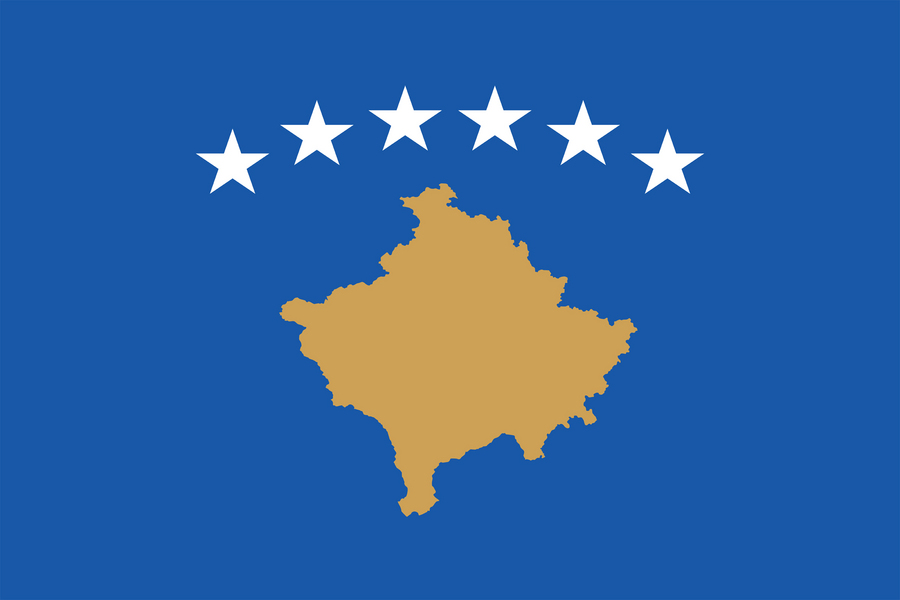
Kosovo is the youngest country in Europe, declaring independence in 2008, and it has one of the youngest populations too.
- CapitalPristinaA young, fast-growing city
- PopulationAbout 1.6 millionMedian age around 30
- Area10,887 km2Landlocked in the western Balkans
- Independence2008The newest country in Europe
Kosovo is a small, landlocked, mountainous territory in the western Balkans. It declared independence from Serbia in 2008. Around 100 UN member states recognise it, but Serbia, Russia, China and several EU members do not, which keeps it out of the United Nations.
Its population is strikingly young. The median age is around 30, among the youngest in Europe, and roughly a quarter of the population is under 15.
National symbols
- National colours Blue, gold and white
- National anthem Europe, which has no words so that it belongs to all communities
- National day Independence Day, 17 February
- National bird Golden eagle
Map of Kosovo
Geography
Kosovo covers 10,887 km2 and borders Serbia, North Macedonia, Albania and Montenegro. It is landlocked.
Mountains ring the territory: the Sar Mountains in the south and the Accursed Mountains in the west, where Gjeravica reaches 2,656 m. Between them lie two basins, the Kosovo Plain and the Metohija Plain, which hold most of the farmland and population.
Climate
Kosovo has a continental climate with cold snowy winters and warm to hot summers, moderated slightly by Mediterranean air reaching in through the river valleys.
Pristina averages around minus 1C in January and 21C in July. The mountains get heavy snow and support ski resorts at Brezovica.
Culture
Albanian and Serbian are both official languages. Around 92 per cent of the population is Albanian and there is a Serb minority, mostly in the north and in enclaves.
Around 95 per cent of Kosovans are Muslim, though the society is largely secular. Traditional music uses the cifteli, a two-stringed long-necked lute. Football and basketball are the leading sports, and Kosovo first competed at the Olympics in 2016, winning gold in judo.
Economy
Kosovo is one of the poorest economies in Europe with high unemployment, especially among young people.
Mining is significant: the Trepca complex holds lead, zinc and silver, and Kosovo has large lignite coal reserves used for electricity. Money sent home by the large Kosovan diaspora in Germany and Switzerland is a major source of income.
The flag
A blue field showing a gold silhouette map of the country, with six white five-pointed stars in an arc above it.
The six stars stand for the main ethnic groups living in Kosovo: Albanians, Serbs, Turks, Gorani, Roma and Bosniaks. The blue and gold echo the European Union flag deliberately. Kosovo is one of only two countries, with Cyprus, whose flag shows a map of itself.