
Germany
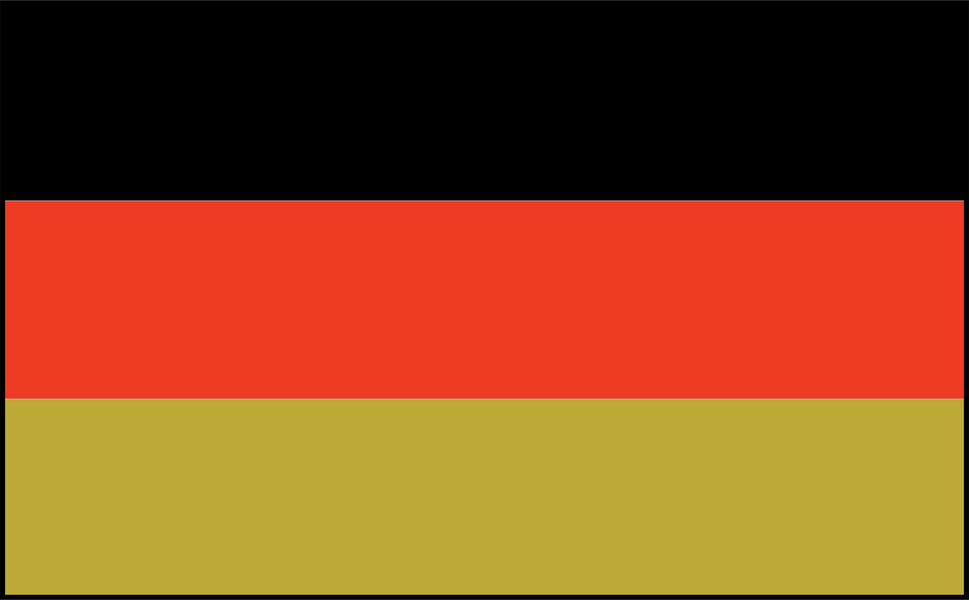
Germany has the largest economy in Europe, and for 41 years it was split into two separate countries by a wall through the middle of its capital.
- CapitalBerlinDivided by a wall from 1961 to 1989
- PopulationAbout 84 millionThe most populous country in the EU
- Area357,596 km2Sixteen federal states
- MotorwaysParts have no speed limitThe famous Autobahn network
Germany sits in the middle of Europe and borders nine countries, more than any other European nation. The north is flat and sandy, the middle is hilly and forested, and the south rises into the Bavarian Alps.
After the Second World War Germany was split into a democratic West and a communist East. The Berlin Wall went up in 1961, cutting the capital in two, and came down on 9 November 1989. The country reunified less than a year later.
National symbols
- National animal Federal eagle
- National colours Black, red and gold
- National anthem Deutschlandlied (Translation: Song of Germany), third verse only
- National day German Unity Day, 3 October
Map of Germany
Geography
Germany covers 357,596 km2 and borders nine countries: Denmark, Poland, the Czech Republic, Austria, Switzerland, France, Luxembourg, Belgium and the Netherlands.
The North German Plain is flat and low, meeting the North Sea and Baltic Sea. Central Germany is a belt of forested uplands including the Harz and the Black Forest. The Bavarian Alps in the far south hold the Zugspitze at 2,962 m. The Rhine and Danube are the great rivers.
Climate
Germany has a temperate climate, milder and wetter in the north-west under Atlantic influence, and more extreme in the east with colder winters and hotter summers.
Snow is common in winter, especially in the south and in the uplands. Summers average around 22C to 25C but heatwaves have become more frequent, and the Rhine has occasionally dropped too low for cargo barges.
Culture
German is the official language and the most widely spoken first language in the European Union.
Germany produced Bach, Beethoven and Brahms, and Munich's Oktoberfest is the largest folk festival in the world. Christmas markets are a German invention now copied everywhere. Around 49 per cent of Germans are Christian and around 44 per cent report no religion.
Economy
Germany is a manufacturing powerhouse, especially cars: Volkswagen, Mercedes-Benz, BMW, Audi and Porsche are all German. Machinery, chemicals and industrial equipment are the other pillars.
It is often called the export champion, and much of that comes from the Mittelstand, thousands of medium-sized specialist firms that dominate narrow niches worldwide.
The flag
Three horizontal bands of black, red and gold. The colours date from the uniforms of a volunteer corps that fought Napoleon: black coats, red trim and gold buttons.
They became the symbol of German democracy and unity in 1848, were dropped by the Nazi regime, and were readopted by both West and East Germany after the war. East Germany added an emblem to the middle; the reunified country uses the plain version.