
Estonia
Estonia was the first country in the world to make internet access a human right and to let people vote online in national elections.
- CapitalTallinnOne of the best-preserved medieval cities in Europe
- PopulationAbout 1.4 millionThe smallest Baltic state
- Area45,335 km2Plus more than 2,000 islands
- Digitale-Residency and online votingAmong the most digital states on Earth
Estonia is the northernmost and smallest of the Baltic states, closer to Helsinki than to the rest of the Baltics. It is flat, forested and dotted with bogs, with over 2,000 islands off its western coast.
After regaining independence in 1991 Estonia rebuilt its state around the internet. Almost all government services are online, people vote in national elections from home, and the country offers e-Residency, a digital identity that lets foreigners run an EU company from anywhere.
National symbols
- National bird Barn swallow
- National flower Cornflower
- National anthem Mu isamaa, mu onn ja room (Translation: My Fatherland, My Happiness and Joy)
- National day Independence Day, 24 February
Map of Estonia
Geography
Estonia covers 45,335 km2 and borders Latvia and Russia, with the Baltic Sea and the Gulf of Finland to the west and north.
The country is very flat, with the highest point, Suur Munamagi, only 318 m. Forest covers around half the land and peat bogs another fifth. There are over 2,000 islands, the largest being Saaremaa and Hiiumaa.
Climate
Estonia has a temperate climate with cold winters and mild summers. Tallinn averages around minus 4C in January and 18C in July.
Snow lies for around three months in winter and the sea often freezes near the coast. Summers are short but the days are very long, with only a few hours of proper darkness in June.
Culture
Estonian is the official language and is closely related to Finnish rather than to Latvian or Russian. Around a quarter of the population speaks Russian as a first language.
Like its Baltic neighbours, Estonia has a huge song festival tradition, and the Laulupidu gathers tens of thousands of singers. Around 58 per cent of Estonians report no religion, one of the highest figures in the world.
Economy
Estonia has a small, open and highly digital economy. Information technology is the flagship sector, and the country has produced several billion-dollar startups including Skype, Wise and Bolt.
Electronics, wood products, machinery and shale oil are the other main sectors. Estonia joined the EU in 2004 and adopted the euro in 2011.
The flag
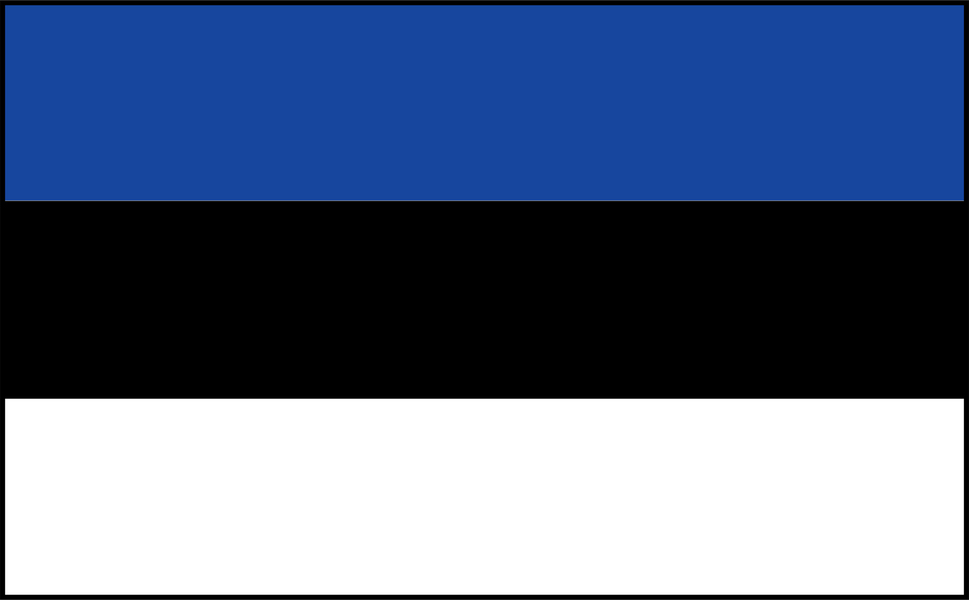
Three horizontal bands of blue, black and white. Blue stands for the sky, the sea and the lakes, and for loyalty. Black stands for the soil and for the dark past of foreign rule. White stands for snow, birch bark and the hope of a brighter future.
The colours were first used by an Estonian student society in 1881 and became the national flag in 1918. They were banned during the Soviet occupation and restored in 1990.