
Denmark
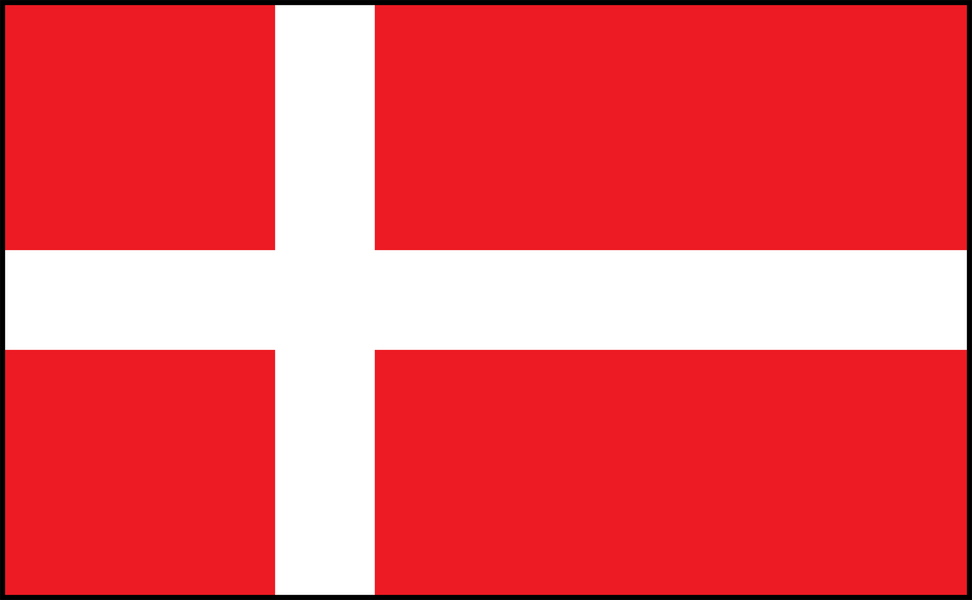
Denmark has the oldest continuously used national flag in the world, and it is the home of Lego and Hans Christian Andersen.
- CapitalCopenhagenLinked to Sweden by the Oresund Bridge
- PopulationAbout 5.9 millionOn a peninsula plus around 400 islands
- Area42,952 km2Denmark proper, excluding Greenland
- Highest pointMollehoj, 171 mOne of the flattest countries in the world
Denmark is the Jutland peninsula sticking up from Germany, plus around 400 islands, of which about 70 are inhabited. Copenhagen sits on the largest, Zealand. The land is low, flat and heavily farmed, and nowhere is more than about 50 km from the sea.
The Kingdom of Denmark also includes Greenland and the Faroe Islands, which govern themselves. Greenland is the largest island in the world, which is why the Kingdom covers an enormous area even though Denmark itself is small.
National symbols
- National animal Mute swan
- National flower Marguerite daisy
- National anthem Der er et yndigt land (Translation: There Is a Lovely Country)
- National day Constitution Day, 5 June
Map of Denmark
Geography
Denmark proper covers 42,952 km2 and shares one land border, with Germany. The North Sea lies to the west and the Baltic Sea to the east. Greenland and the Faroe Islands are self-governing parts of the Kingdom.
The country is remarkably flat: the highest natural point, Mollehoj, is only 171 m. The coastline is long and indented, around 7,300 km, and the Oresund Bridge and tunnel connect Copenhagen to Malmo in Sweden.
Climate
Denmark has a mild maritime climate. Winters hover around freezing and summers average about 20C, with the sea keeping extremes away.
It is windy and often overcast, with rain spread through the year. That steady wind is why Denmark built a wind power industry: it now generates around half of its electricity from wind alone.
Culture
Danish is the official language. It is closely related to Norwegian and Swedish, and Scandinavians can often understand each other with effort.
Hygge, a sense of cosy contentment usually involving candles, blankets and good company, is a Danish concept that spread worldwide. Hans Christian Andersen wrote The Little Mermaid and The Ugly Duckling here. Around 71 per cent of Danes belong to the Church of Denmark.
Economy
Denmark has a high-income economy with a strong welfare state funded by high taxes. Pharmaceuticals lead exports, especially Novo Nordisk, one of Europe's most valuable companies.
Shipping is huge: Maersk is one of the largest container shipping firms in the world. Denmark also exports enormous amounts of pork, and Vestas is a global leader in wind turbines.
The flag
A red field with a white cross whose vertical arm sits closer to the flagpole. It is called the Dannebrog, meaning Danish cloth.
The legend says it fell from the sky during a battle in Estonia on 15 June 1219, turning the tide for the Danish king. Whatever its real origin, it is the oldest continuously used national flag in the world, and every other Nordic country copied its off-centre cross design.