
Bulgaria
Bulgaria grows a large share of the world's rose oil, and it takes around 3,000 hand-picked roses to make a single 10 ml bottle.
- CapitalSofiaOne of the oldest cities in Europe
- PopulationAbout 6.4 millionFalling faster than almost anywhere
- Area110,879 km2Mountains, plains and a Black Sea coast
- Rose oilA leading world producerFrom the Valley of the Roses
Bulgaria sits in the eastern Balkans with the Danube along its northern border and the Black Sea to the east. Two mountain ranges cross it: the Balkan Mountains through the middle and the higher Rila and Rhodope ranges in the south-west.
Between them lies the Valley of the Roses, where Damask roses are grown for their oil. The petals must be picked before sunrise while the oil content is highest, and it takes several tonnes of petals to produce one kilogram of rose oil, which is why it is used by perfume makers worldwide.
National symbols
- National animal Lion
- National flower Rose
- National anthem Mila Rodino (Translation: Dear Motherland)
- National day Liberation Day, 3 March
Map of Bulgaria
Geography
Bulgaria covers 110,879 km2 and borders Romania, Serbia, North Macedonia, Greece and Turkey, with the Black Sea to the east.
The Balkan Mountains run west to east through the centre. In the south-west, Musala in the Rila range reaches 2,925 m, the highest point in the Balkan Peninsula. The Danubian Plain in the north and the Thracian Plain in the south are the main farming regions.
Climate
Bulgaria has a continental climate in the north with cold winters and hot summers, shading towards Mediterranean in the far south.
The Black Sea coast is milder and draws summer holidaymakers. The mountains hold snow for months and support ski resorts at Bansko and Borovets.
Culture
Bulgarian is the official language, written in Cyrillic. Bulgaria celebrates 24 May as a day dedicated to its alphabet and literature, which is unusual anywhere.
Bulgarian folk singing, with its distinctive open-throated harmonies, became internationally known through the recordings of the Bulgarian State Television Female Vocal Choir. Around 71 per cent of Bulgarians are Orthodox Christian. Yoghurt with the bacterium Lactobacillus bulgaricus is a national food.
Economy
Bulgaria has a mixed economy with manufacturing, especially machinery, electronics and clothing, plus a growing software and IT outsourcing sector.
Agriculture produces wheat, sunflowers, tomatoes and of course roses and lavender for the perfume industry. Black Sea beach tourism and winter ski tourism both bring in significant income.
The flag
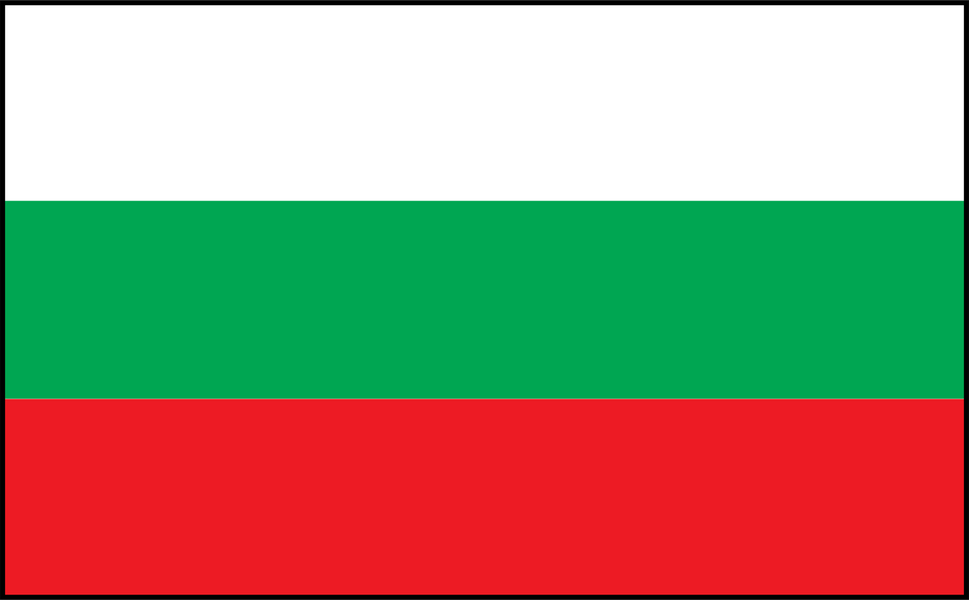
Three horizontal bands of white, green and red. White stands for peace and freedom, green for the fertility of the land and its farming, and red for the courage and blood of those who fought for independence.
The design dates from 1879, after Bulgaria was freed from nearly 500 years of Ottoman rule. It was based on the Russian flag, with the blue band replaced by green because Russia had been the country's liberator.