
Belgium
Belgium has three official languages, and it once went 589 days without a government while the country carried on perfectly well.
- CapitalBrusselsHeadquarters of the EU and NATO
- PopulationAbout 11.8 millionSplit between Flanders and Wallonia
- Area30,528 km2One of the smaller European countries
- Official languages3Dutch, French and German
Belgium is divided by language. The north, Flanders, speaks Dutch. The south, Wallonia, speaks French. A small area near the German border speaks German, and Brussels is officially bilingual. Each region runs many of its own affairs, which makes Belgian politics complicated.
Brussels hosts the European Commission, the Council of the European Union and NATO, which makes this small country the political centre of Europe.
National symbols
- National animal Lion
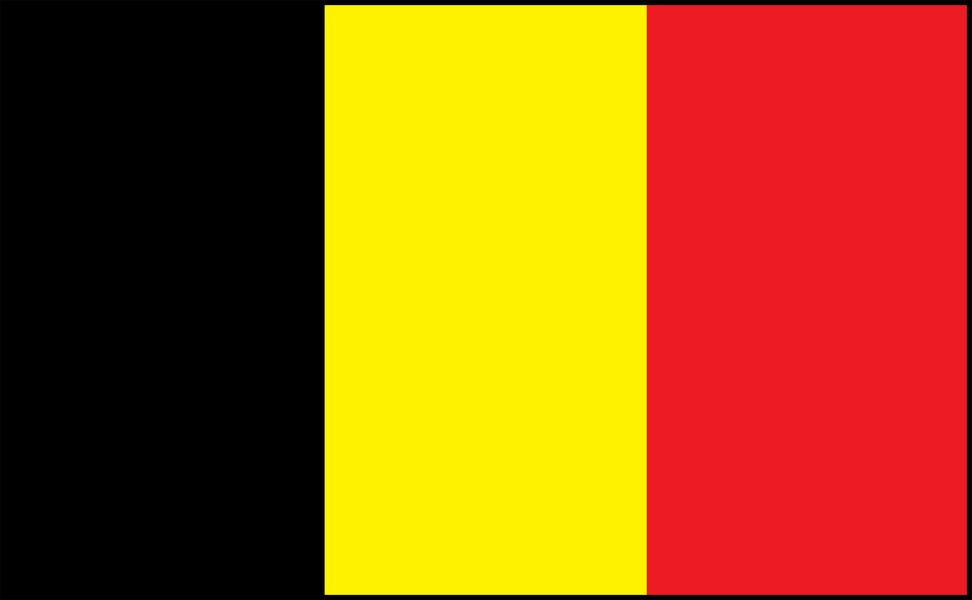
- National colours Black, yellow and red
- National anthem La Brabanconne (Translation: The Song of Brabant)
- National day Belgian National Day, 21 July
Map of Belgium
Geography
Belgium covers 30,528 km2 and borders the Netherlands, Germany, Luxembourg and France, with a short 67 km North Sea coastline.
The land rises from flat coastal plains and polders in the north-west, through the central low plateau, to the forested Ardennes hills in the south-east. The highest point, Signal de Botrange, is only 694 m. The Scheldt and Meuse are the main rivers.
Climate
Belgium has a mild maritime climate: cool summers around 17C to 23C, winters near freezing, and rain spread through the year.
The Ardennes are noticeably colder and wetter than the coast and can get significant snow. Fog and grey skies are common, and Belgium averages fewer than 1,600 hours of sunshine a year.
Culture
Dutch, French and German are all official. Around 60 per cent of Belgians speak Dutch and around 40 per cent French, with a small German-speaking community in the east.
Belgium invented the modern beer culture, with hundreds of styles including Trappist ales brewed by monks, recognised by UNESCO. Around 55 per cent of Belgians are Catholic. Chips were probably invented here, not in France.
Economy
Belgium is a trading economy. Antwerp is one of Europe's largest ports and the world centre of the diamond trade, handling a very large share of rough diamonds.
Chemicals and pharmaceuticals are the biggest export sectors, followed by cars, machinery and food. Its position between Germany, France and the Netherlands makes it a natural distribution hub.
The flag
Three vertical bands of black, yellow and red, taken from the coat of arms of the Duchy of Brabant, which showed a gold lion with red claws and tongue on a black shield.
The flag was adopted when Belgium became independent from the Netherlands in 1830. Unusually for a national flag it is close to square, with an official ratio of 13 to 15, though the versions flown are often more rectangular.