
Armenia
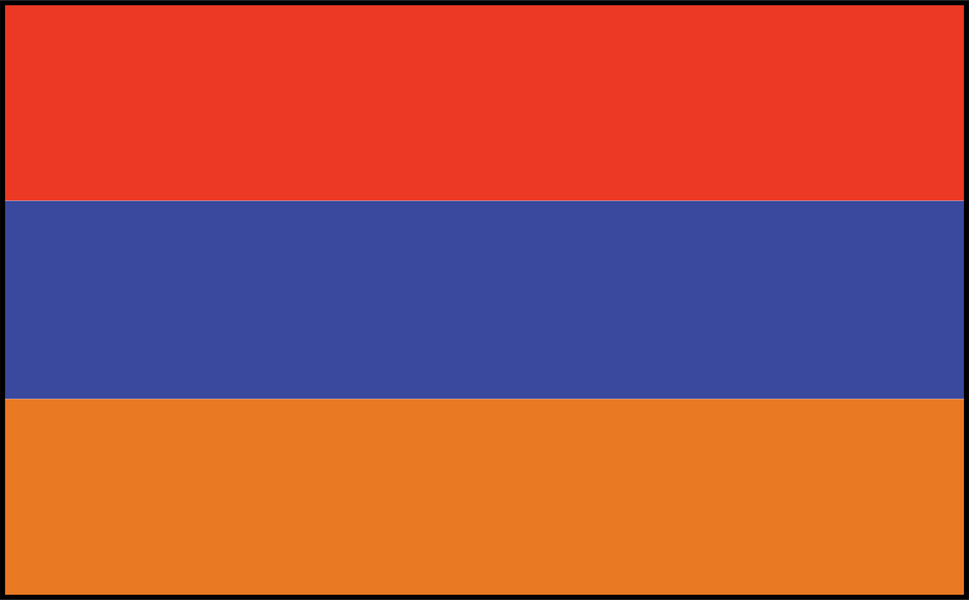
Armenia was the first country in the world to adopt Christianity as its state religion, in the year 301.
- CapitalYerevanFounded in 782 BC, older than Rome
- PopulationAbout 3 millionWith a much larger diaspora abroad
- Area29,743 km2Landlocked and mountainous
- ChristianityState religion since 301 ADThe first country to do so
Armenia is a small, landlocked, mountainous country in the South Caucasus. Almost all of it sits above 1,000 m, and Yerevan itself is around 1,000 m up. Lake Sevan, high in the mountains, is one of the largest high-altitude freshwater lakes in the world.
Armenia adopted Christianity as its official religion in 301 AD, before the Roman Empire did. That is why the country is dotted with very old stone churches and monasteries, several of them carved partly into cliffs.
National symbols
- National animal Eagle and lion, both on the coat of arms
- National flower Apricot blossom
- National anthem Mer Hayrenik (Translation: Our Fatherland)
- National day Independence Day, 21 September
Map of Armenia
Geography
Armenia covers 29,743 km2 and borders Georgia, Azerbaijan, Iran and Turkey. It is landlocked and its borders with Turkey and Azerbaijan have long been closed.
The country is a high plateau crossed by the Lesser Caucasus. The highest point is Mount Aragats at 4,090 m. Lake Sevan sits at 1,900 m and covers about 5 per cent of the country's area, holding most of its fresh water.
Climate
Armenia has a highland continental climate: hot dry summers and cold winters, with big differences between day and night temperatures because of the altitude and dry air.
Yerevan can pass 35C in July and drop below minus 10C in winter. The mountains get heavy snow, and there are ski resorts at Tsaghkadzor. Rainfall is generally low.
Culture
Armenian is the official language and has its own 38-letter alphabet, created by the monk Mesrop Mashtots in 405 AD specifically so the Bible could be translated.
Around 93 per cent of Armenians belong to the Armenian Apostolic Church. The duduk, a double-reed woodwind made from apricot wood with a deep mournful tone, is the national instrument and is on the UNESCO heritage list. Around 8 million Armenians live abroad, far more than in Armenia itself.
Economy
Mining is significant: copper, molybdenum and gold. Armenia also cuts and polishes diamonds, a trade with a long history here.
Information technology has grown quickly and is now one of the fastest-expanding sectors. Brandy, wine, apricots and processed food are traditional exports, and money sent home by the diaspora is important.
The flag
Three horizontal bands of red, blue and orange. Red stands for the Armenian highlands, the struggle for survival and the Christian faith. Blue stands for the Armenian sky and the will to live under peaceful skies.
Orange, unusual on a national flag, stands for the creative talent and hard-working nature of the Armenian people. The design was first used by the short-lived First Republic in 1918 and restored in 1990.