
Thailand
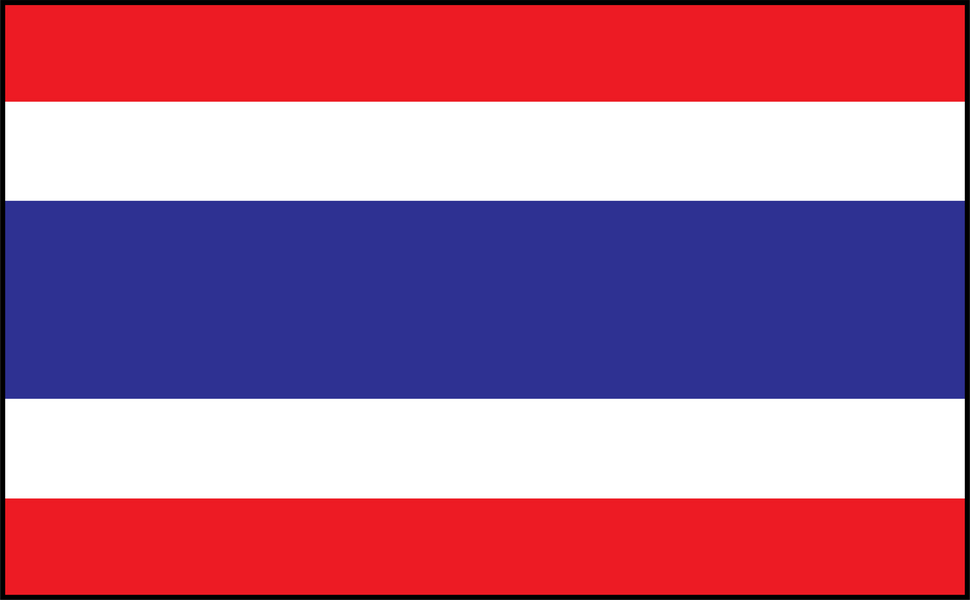
Thailand is the only country in Southeast Asia never colonised by a European power, which is why its name means land of the free.
- CapitalBangkokIts full ceremonial name is the longest city name in the world
- PopulationAbout 72 millionCentred on the Chao Phraya plain
- Area513,120 km2Roughly the shape of an elephant's head
- Never colonisedUnique in the regionThailand means land of the free
Thailand sits at the centre of mainland Southeast Asia, with forested mountains in the north, a flat rice-growing plain around Bangkok, a dry plateau in the north-east and a long peninsula reaching south towards Malaysia between two seas.
While Britain took Burma and Malaya and France took Vietnam, Laos and Cambodia, Siam stayed independent through skilful diplomacy, playing the two empires off against each other and modernising fast. It changed its name to Thailand in 1939.
National symbols
- National animal Thai elephant
- National flower Golden shower tree blossom
- National anthem Phleng Chat Thai (Translation: Thai National Anthem)
- National day National Day, 5 December
Map of Thailand
Geography
Thailand covers 513,120 km2 and borders Myanmar, Laos, Cambodia and Malaysia, with the Gulf of Thailand to the south-east and the Andaman Sea to the south-west.
The north is mountainous and rises to Doi Inthanon at 2,565 m. The central plain around the Chao Phraya River is the rice bowl of the country. The Khorat Plateau in the north-east is drier, and the southern peninsula has rainforest and limestone karst islands.
Climate
Thailand is tropical with three seasons: hot from March to May, rainy from June to October when the monsoon arrives, and cool and dry from November to February.
Temperatures usually range from 25C to 35C, and Bangkok is one of the hottest major cities in the world on average. The south gets rain almost all year, which is why its rainforest is so dense.
Culture
Thai is the official language, written in its own script and using five tones, so the same syllable can mean five different things depending on pitch.
Around 93 per cent of Thais are Buddhist, and many young men spend a period as a monk. The wai, a bow with palms pressed together, is the standard greeting. Songkran, Thai New Year in April, has become a nationwide water fight.
Economy
Tourism is a major industry, drawing tens of millions of visitors a year to Bangkok, the northern temples and the southern islands.
Thailand is also a manufacturing hub, especially for cars, electronics and hard drives, and it is one of the world's largest exporters of rice, rubber and canned seafood.
The flag
Five horizontal bands: red, white, blue, white, red, with the central blue band twice as wide as the others. It is called the Trairanga, meaning tricolour.
Red stands for the land and the people, white for religion and purity, and blue for the monarchy. Blue was placed in the middle in 1917 partly because it was also the colour of Thailand's First World War allies, Britain, France, Russia and the United States.