
Sri Lanka
Sri Lanka is a teardrop-shaped island where you can find rainforest, tea plantations, elephants and leopards within a few hours' drive.
- CapitalSri Jayawardenepura KotteThough Colombo is the commercial centre
- PopulationAbout 22 millionOn an island off southern India
- Area65,610 km2About the size of Ireland
- TeaA top world exporterGrown in the central highlands
Sri Lanka lies about 30 km off the southern tip of India. Coastal plains ring a central highland region that rises above 2,500 m, and that height is what makes the island so varied: dry zone in the north and east, wet rainforest in the south-west, and cool hill country in the middle.
The British planted tea in those hills in the 1860s after a fungus destroyed the coffee crop. Ceylon tea is still one of the country's best-known exports, picked by hand on steep terraced slopes.
National symbols
- National animal Sri Lankan giant squirrel, with the elephant as a cultural symbol
- National flower Blue water lily
- National anthem Sri Lanka Matha (Translation: Mother Sri Lanka)
- National day Independence Day, 4 February
Map of Sri Lanka
Geography
Sri Lanka covers 65,610 km2 and has no land borders, lying in the Indian Ocean about 30 km from the southern tip of India across the Palk Strait.
A central highland massif rises to Pidurutalagala at 2,524 m, surrounded by coastal plains. Adam's Peak, at 2,243 m, has a rock formation at its summit revered by Buddhists, Hindus, Muslims and Christians alike. The island has around 100 rivers, all radiating from the highlands.
Climate
Sri Lanka is tropical, warm all year at around 26C to 32C on the coast and much cooler in the hill country, where Nuwara Eliya can drop close to freezing at night.
Two monsoons hit different sides of the island at different times: the south-west from May to September and the north-east from October to January. That is why one coast can be sunny while the other is under heavy rain.
Culture
Sinhala and Tamil are both official languages, and English is widely used. Around 75 per cent of the population is Sinhalese and around 15 per cent Tamil.
Around 70 per cent of Sri Lankans are Buddhist, and the Temple of the Tooth in Kandy houses a relic said to be a tooth of the Buddha. Around 12 per cent are Hindu. The Kandy Esala Perahera is a spectacular annual procession of decorated elephants, dancers and drummers.
Economy
Tea, garments and tourism are the traditional pillars. Sri Lanka is one of the world's largest tea exporters, and Ceylon tea is a protected name.
Cinnamon originated here and Sri Lanka still supplies most of the world's true cinnamon. The country went through a severe economic crisis in 2022, and gems, especially blue sapphires, remain a significant export.
The flag
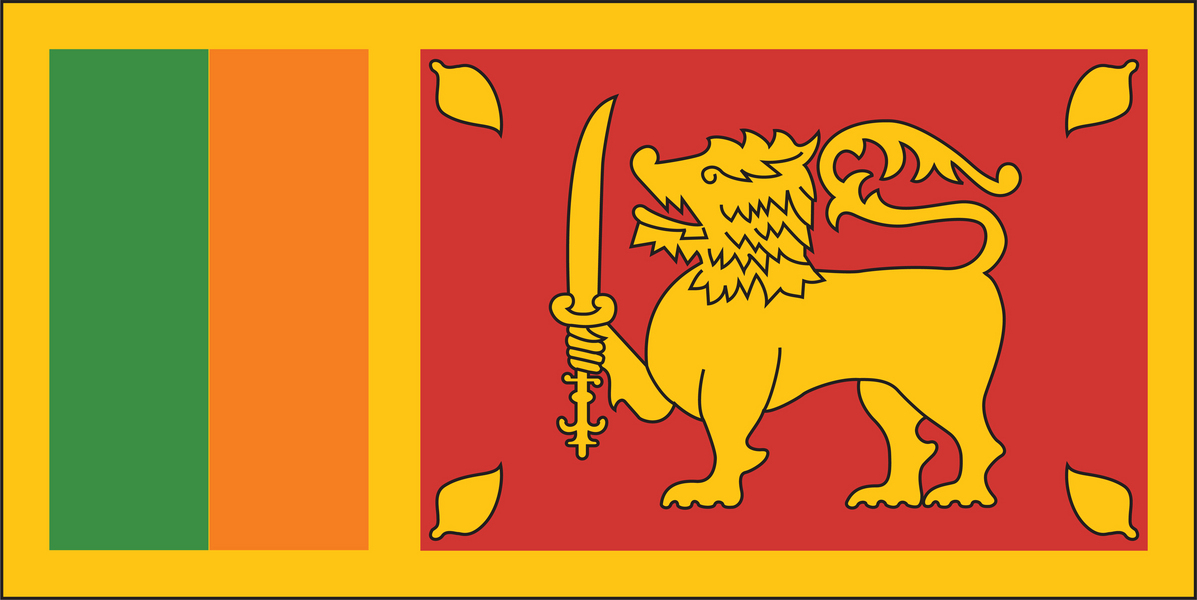
A gold lion holding a sword on a dark red field, with a gold bo leaf in each corner, beside two vertical stripes of green and orange, the whole thing framed in gold.
The lion represents the Sinhalese people and the sword the sovereignty of the country. The four bo leaves stand for Buddhist ideals of loving kindness, compassion, joy and equanimity. The green stripe represents the Muslim community and the orange the Tamil community.