
Philippines
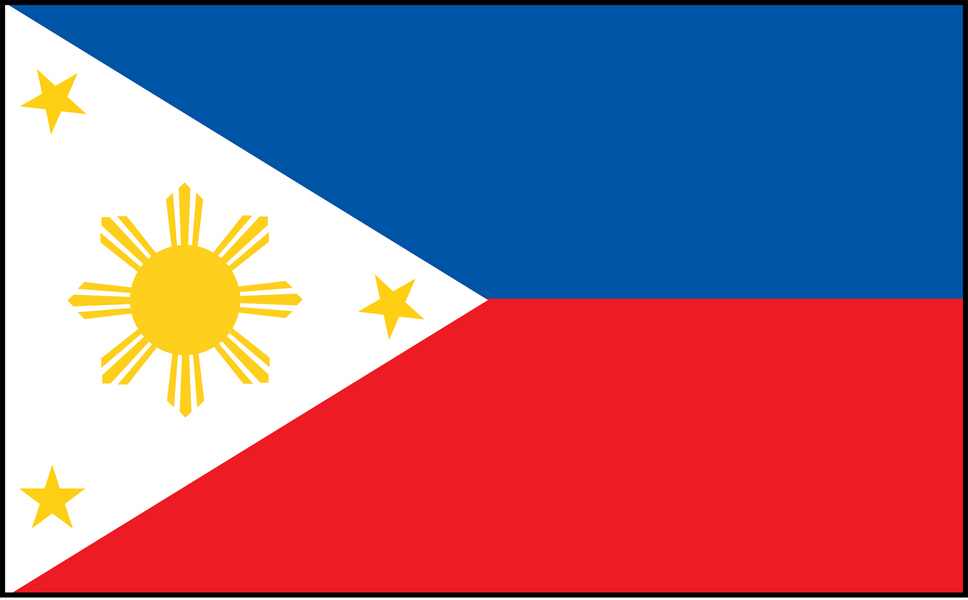
The Philippines is made of 7,641 islands, and its flag is the only one in the world that is flown upside down in wartime.
- CapitalManilaOne of the most densely populated cities on Earth
- PopulationAbout 117 millionAcross around 2,000 inhabited islands
- Islands7,641Only around 2,000 are inhabited
- LanguagesAround 180Filipino and English are official
The Philippines is an archipelago of 7,641 islands in the western Pacific, grouped into three regions: Luzon in the north, the Visayas in the middle and Mindanao in the south. The islands are volcanic, mountainous and ringed with coral reefs.
The country sits on the Ring of Fire and in the main Pacific typhoon path, so it faces both volcanic eruptions and around 20 tropical storms a year, more than any other country.
National symbols
- National bird Philippine eagle, one of the largest eagles in the world
- National flower Sampaguita, a jasmine
- National anthem Lupang Hinirang (Translation: Chosen Land)
- National day Independence Day, 12 June
Map of Philippines
Geography
The Philippines covers 300,000 km2 and has no land borders, lying in the western Pacific between the South China Sea and the Philippine Sea.
The islands are mostly volcanic and mountainous, rising to Mount Apo at 2,954 m on Mindanao. The Philippine Trench off the east coast reaches over 10,500 m deep. The country sits inside the Coral Triangle, the richest marine habitat on Earth.
Climate
The Philippines is tropical and humid all year, generally 25C to 33C, with a dry season roughly December to May and a wet season June to November.
Typhoons are the defining hazard, striking around 20 times a year. Typhoon Haiyan in 2013 was one of the strongest storms ever recorded at landfall and devastated the central Visayas.
Culture
Filipino, based on Tagalog, and English are the official languages, and around 180 other languages are spoken, including Cebuano and Ilocano.
Around 79 per cent of Filipinos are Catholic, a legacy of over 300 years of Spanish rule, making this one of only two majority-Christian countries in Asia. Christmas celebrations start in September. Jeepneys, brightly decorated buses converted from American army jeeps, are an icon of Philippine streets.
Economy
Business process outsourcing, especially call centres, is one of the largest industries, built on widespread English fluency.
Electronics assembly is the biggest export sector. Around 10 million Filipinos work abroad, and the money they send home is one of the largest such flows in the world, worth a substantial share of the economy.
The flag
A white equilateral triangle at the flagpole side holding a golden sun with eight rays and three gold stars, beside two horizontal bands of blue above and red below.
The eight rays stand for the first eight provinces that rose against Spanish rule, and the three stars for the three island groups: Luzon, the Visayas and Mindanao. Blue stands for peace and justice, red for courage, and white for equality.