
Lebanon
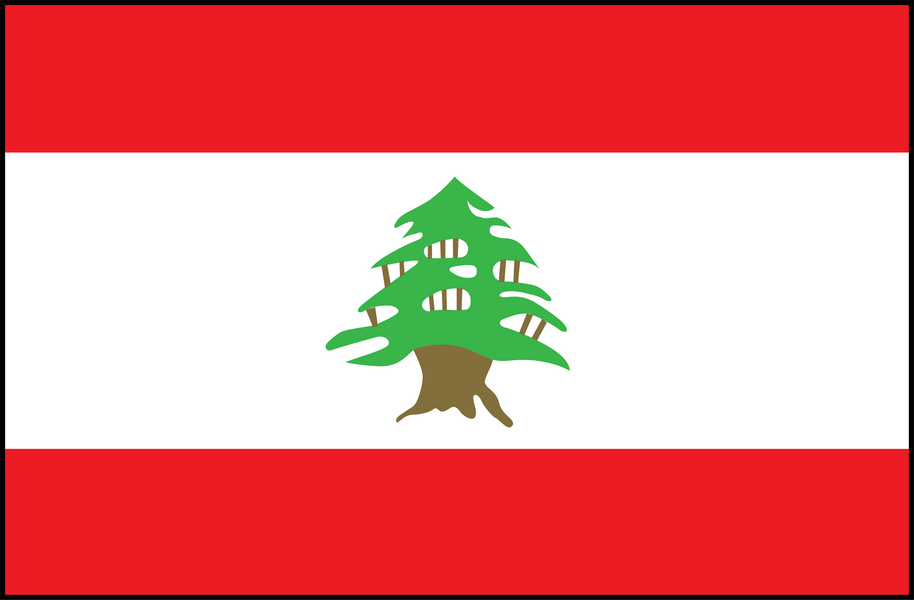
Lebanon is the only country in the Middle East with no desert, and its national symbol is a cedar tree that can live over 1,000 years.
- CapitalBeirutDestroyed and rebuilt seven times in its history
- PopulationAbout 5.4 millionPlus a very large diaspora abroad
- Area10,452 km2One of the smallest Middle Eastern countries
- No desertUnique in the regionMountains, coast and a fertile valley
Lebanon is small and mountainous, a narrow strip on the eastern Mediterranean. Two parallel mountain ranges run down its length with the fertile Bekaa Valley between them. It is the only Middle Eastern country with no desert at all.
The Lebanon cedar has been famous for thousands of years. Phoenicians used it for ships, Egyptians for mummification resin, and the Bible records it being used to build Solomon's Temple. Only small protected groves of the ancient trees survive.
National symbols
- National tree Lebanon cedar, shown on the flag
- National flower Cyclamen
- National anthem Kulluna lil-watan (Translation: All of Us, for Our Country)
- National day Independence Day, 22 November
Map of Lebanon
Geography
Lebanon covers 10,452 km2 and borders Syria and Israel, with the Mediterranean Sea to the west.
The Mount Lebanon range runs parallel to the coast and reaches Qurnat as Sawda at 3,088 m, high enough to hold snow into summer. Behind it the Bekaa Valley is the country's farming heartland, and the Anti-Lebanon range forms the Syrian border.
Climate
Lebanon has a Mediterranean climate: hot dry summers on the coast and mild wet winters. The mountains get heavy snow, and Lebanon is one of the few Middle Eastern countries with ski resorts.
The name Lebanon is thought to come from a Semitic word meaning white, referring to the snow on the mountains. You can in principle ski in the morning and swim in the sea the same afternoon.
Culture
Arabic is the official language, with French and English widely spoken, a legacy of the French mandate and of international schooling.
Lebanon has 18 officially recognised religious groups, and political posts are shared between them by agreement: the president is Maronite Christian, the prime minister Sunni Muslim and the parliamentary speaker Shia Muslim. Around 61 per cent of the population is Muslim and around 33 per cent Christian.
Economy
Lebanon historically had a banking and services economy and was known as the Switzerland of the Middle East, though a severe financial collapse from 2019 destroyed much of that.
Agriculture in the Bekaa Valley produces wine, apples, citrus and potatoes. Lebanese wine has been made for around 5,000 years. Money sent home by the large Lebanese diaspora is a critical source of income.
The flag
A wide white band between two red bands, with a green Lebanon cedar tree in the centre touching the top and bottom of the white band.
Red stands for the blood shed for liberation, white for peace and the snow on the mountains, and the cedar for holiness, eternity and peace. The cedar has been a symbol of Lebanon for thousands of years and is mentioned repeatedly in the Bible.