
Iran
Iran was the heart of the Persian Empire, and its ancient underground water channels have been carrying water across the desert for around 3,000 years.
- CapitalTehranBacked by the snow-capped Alborz mountains
- PopulationAbout 89 millionMostly urban
- Area1,648,195 km2Seventeenth largest country
- QanatsAround 3,000 years oldUnderground channels still in use
Iran is a high plateau ringed by mountains, with two great salt deserts in the middle where almost nothing lives. The Alborz range in the north holds Mount Damavand, a dormant volcano and the highest peak in the Middle East.
To farm a country this dry, Persians invented qanats: gently sloping tunnels dug from the base of the mountains that carry groundwater tens of kilometres underground to the fields, losing almost nothing to evaporation. Some have been running for around 3,000 years.
National symbols
- National animal Asiatic lion in tradition, and the Persian leopard
- National flower Red rose, and the tulip
- National anthem National Anthem of the Islamic Republic of Iran
- National day Islamic Republic Day, 1 April
Map of Iran
Geography
Iran covers 1,648,195 km2 and borders Turkey, Armenia, Azerbaijan, Turkmenistan, Afghanistan, Pakistan and Iraq, with the Caspian Sea to the north and the Persian Gulf and Gulf of Oman to the south.
The Zagros range runs down the west and the Alborz along the north, where Mount Damavand reaches 5,610 m. Between them lies a high central plateau containing the Dasht-e Kavir and Dasht-e Lut deserts. The Lut has recorded some of the hottest land surface temperatures ever measured by satellite.
Climate
Most of Iran is arid or semi-arid with hot summers and cold winters, and big swings between day and night because the air is so dry.
The Caspian coast in the north is the exception: humid and green, with heavy rainfall and rice paddies and tea plantations. The southern Persian Gulf coast is hot and humid, and the central deserts are among the driest places on Earth.
Culture
Persian, called Farsi, is the official language, with Azerbaijani, Kurdish and Arabic also widely spoken.
Around 99 per cent of Iranians are Muslim, mostly Shia. Nowruz, Persian New Year at the spring equinox, is a 13-day celebration older than Islam and shared across the region. Persian poetry, especially Hafez and Rumi, and hand-knotted Persian carpets are central to national identity.
Economy
Iran has some of the largest oil and natural gas reserves in the world, and both dominate exports despite long-standing international sanctions.
Petrochemicals, steel and carpets are other major exports. Iran is also the world's biggest producer of saffron and pistachios, and international sanctions have pushed it to develop a largely self-sufficient domestic industry.
The flag
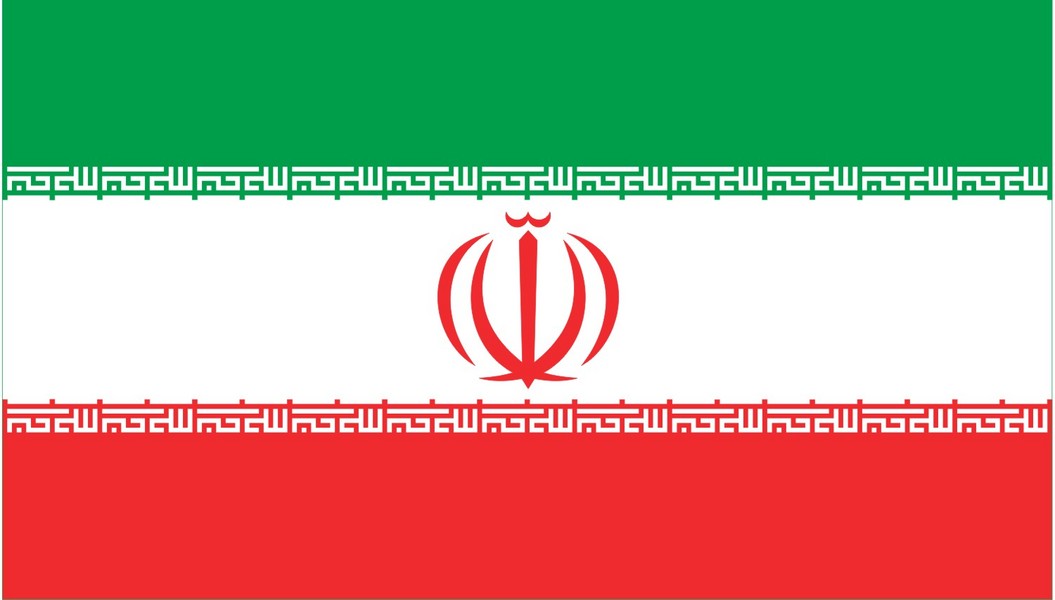
Three horizontal bands of green, white and red, with a stylised red emblem in the centre of the white band.
The emblem is a highly stylised word Allah, designed so it also resembles a tulip, a Persian symbol for those who die for their country. Along the inner edges of the green and red bands the phrase "Allahu Akbar" is repeated 22 times, marking the 22nd day of the month when the 1979 revolution succeeded.