
East Timor
East Timor was the first new sovereign state of the 21st century, becoming independent in 2002 after a long and violent struggle.
- CapitalDiliOn the north coast
- PopulationAbout 1.4 millionOn the eastern half of Timor island
- Area14,919 km2Mountainous and rugged
- Independence2002The first new country of the 21st century
East Timor, or Timor-Leste, occupies the eastern half of the island of Timor, with the western half belonging to Indonesia. It is small, steep and mountainous, with a spine of hills rising above 2,900 m running down its length.
It was a Portuguese colony for around 400 years, then invaded by Indonesia in 1975. After a UN-supervised vote in 1999 and a violent aftermath, it became fully independent in 2002, the first new sovereign state of the century.
National symbols
- National bird Timor imperial pigeon
- National colours Red, yellow, black and white
- National anthem Patria (Translation: Fatherland)
- National day Restoration of Independence Day, 20 May
Map of East Timor
Geography
East Timor covers 14,919 km2 and shares one land border, with Indonesia, on the island of Timor. It also includes the Oecusse enclave inside Indonesian territory and the island of Atauro.
A mountain range runs the length of the country, rising to Tatamailau at 2,986 m. The terrain is rugged and steep, which makes road travel slow, and the north coast drops quickly into very deep water.
Climate
East Timor is tropical, hot and humid, with a wet season from December to April and a long dry season for the rest of the year.
The north coast is noticeably drier than the south, which catches more rain. The mountains are cooler and wetter, which is why coffee grows well there. Droughts are a recurring problem for farmers.
Culture
Tetum and Portuguese are the official languages, with Indonesian and English recognised as working languages, and around 30 local languages spoken.
Around 97 per cent of East Timorese are Catholic, a legacy of Portuguese rule and of the church's role during the Indonesian occupation. Tais, a hand-woven cloth with regional patterns, is used for ceremonies and gifts.
Economy
Offshore oil and gas in the Timor Sea provide most government revenue, held in a sovereign wealth fund, though the main producing field is declining.
Coffee is the largest non-oil export, grown organically in the highlands and sold to specialist roasters worldwide. Most people farm for themselves, and the country is working to develop tourism around its diving.
The flag
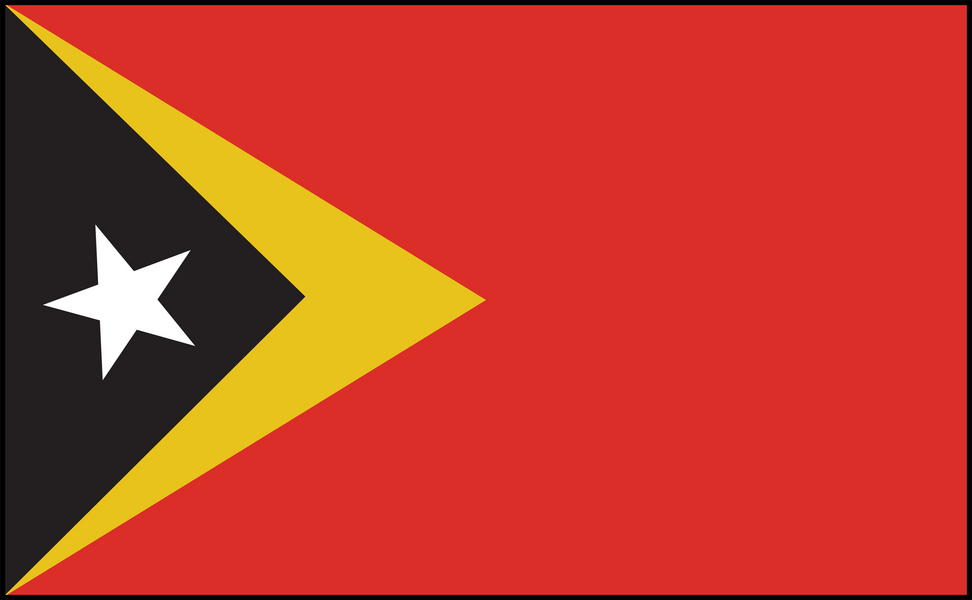
A red field with a black triangle at the flagpole edge bearing a white five-pointed star, laid over a slightly larger yellow triangle.
Red stands for the struggle for liberation, yellow for the traces of colonialism, and black for the obscurantism that needs to be overcome. The white star is the light that guides the country forward.