
China
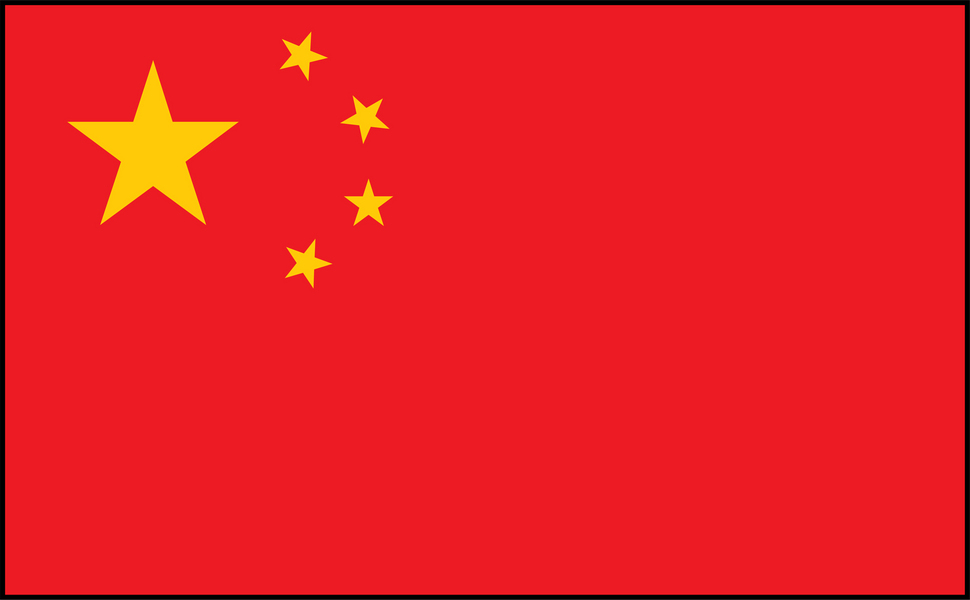
China has the largest population of any country on Earth, and the Great Wall built to defend it runs for over 21,000 km.
- CapitalBeijingHome to the Forbidden City
- PopulationAbout 1.41 billionRoughly one in six people alive
- Area9,596,960 km2Fourth largest country in the world
- Great WallOver 21,000 kmBuilt and rebuilt across 2,000 years
China spans an enormous range of land: the Himalayas and the Tibetan Plateau in the west, the Gobi Desert in the north, and the great fertile plains of the Yellow and Yangtze rivers in the east where most of the population lives.
Chinese civilisation is one of the oldest continuous cultures in the world, going back over 3,500 years of written history. Paper, printing, gunpowder and the compass were all invented here, and they are known in China as the Four Great Inventions.
National symbols
- National animal Giant panda, and the dragon in tradition
- National flower Peony, and the plum blossom
- National anthem March of the Volunteers
- National day National Day, 1 October
Map of China
Geography
China covers 9,596,960 km2 and borders 14 countries, more than almost anywhere, with coasts on the Yellow, East China and South China Seas.
The land steps down from west to east. The Tibetan Plateau, the highest and largest plateau in the world, holds Mount Everest at 8,849 m on the Nepalese border. The Yangtze is the longest river in Asia at 6,300 km, and the Yellow River is nicknamed both the cradle of Chinese civilisation and China's sorrow, for its terrible floods.
Climate
China has almost every climate. The south-east is subtropical and monsoon-driven, hot and very wet in summer. The north-east has bitterly cold winters, and Harbin holds an ice festival with buildings carved from river ice.
The north-west is desert, including the Gobi and Taklamakan, and the Tibetan Plateau is high, cold and thin-aired all year. Typhoons strike the south-east coast between July and September.
Culture
Standard Mandarin is the official language, and Chinese characters are used to write it. Chinese writing is the oldest system still in use, and a well-educated reader knows several thousand characters.
Chinese New Year, or Spring Festival, triggers the largest annual human migration on the planet as hundreds of millions travel home. Around 50 per cent of Chinese people report no religion, with Buddhism, Taoism and folk religions widely practised.
Economy
China is the largest manufacturing economy in the world, producing a huge share of global electronics, clothing, steel, solar panels and consumer goods.
It is also the biggest exporter overall and leads the world in electric vehicle production. Enormous infrastructure projects, including over 40,000 km of high-speed railway, have been built since 2008.
The flag
A red field with five gold stars in the top left corner: one large star with four smaller ones arranged in an arc beside it, each of the small ones tilted so a point aims at the centre of the big one.
Red stands for the communist revolution. The large star represents the Communist Party and the four smaller ones the four social classes named at the founding of the People's Republic in 1949. Gold was chosen for brightness against the red.