
Afghanistan
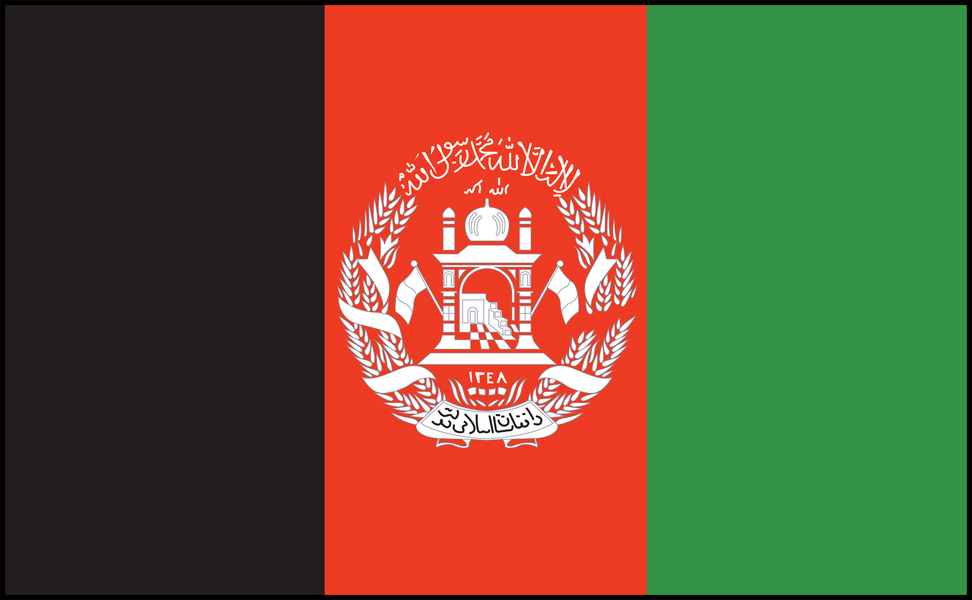
Afghanistan is so mountainous that some valleys are cut off from the rest of the country by snow for months every winter.
- CapitalKabulAt around 1,790 m, one of the highest capitals
- PopulationAbout 42 millionLandlocked in Central and South Asia
- Area652,230 km2Dominated by the Hindu Kush
- Highest pointNoshaq, 7,492 mIn the Hindu Kush range
Afghanistan is landlocked and mountainous, with the Hindu Kush range running from north-east to south-west through the middle. Around half the country is above 2,000 m, and the Wakhan Corridor in the far north-east is a narrow finger of land reaching towards China between Tajikistan and Pakistan.
Its position at the crossroads of Central Asia, South Asia and the Middle East meant the Silk Road ran through it, and empires from Alexander the Great onwards have passed through. That same position has made it repeatedly a place of conflict.
National symbols
- National animal Snow leopard
- National flower Tulip
- National sport Buzkashi, a horseback game played with a goat carcass
- National dish Kabuli pulao, rice with lamb, carrots and raisins
Map of Afghanistan
Geography
Afghanistan covers 652,230 km2 and borders Pakistan, Iran, Turkmenistan, Uzbekistan, Tajikistan and China. It is landlocked.
The Hindu Kush dominates, rising to Noshaq at 7,492 m. Plains lie in the north along the Amu Darya and in the south-west, where the Registan Desert stretches towards Iran. The Wakhan Corridor in the north-east is a narrow high-altitude strip created by 19th-century border-drawing.
Climate
Afghanistan has a dry continental climate with hot summers and very cold winters, and huge differences between day and night because the air is so dry and the land so high.
The mountains get heavy snow, which supplies most of the country's water when it melts in spring. Rainfall is low elsewhere, and prolonged droughts are a recurring and serious problem for farming.
Culture
Pashto and Dari, a form of Persian, are the two official languages, with Uzbek, Turkmen and several others spoken regionally.
Almost all Afghans are Muslim. Buzkashi, in which riders compete to carry a goat carcass to a goal, is the national sport and has been played for centuries. Afghan carpets, hand-knotted with distinctive geometric patterns, are known worldwide.
Economy
Agriculture supports most of the population, growing wheat, fruit and nuts. Afghan pomegranates, grapes and almonds are prized regionally.
The country holds large untapped mineral deposits, including copper, iron ore and lithium, but decades of conflict have prevented development. Decades of war and, since 2021, sharply reduced foreign aid have left the economy in severe difficulty.
The flag
A white field with the shahada, the Islamic declaration of faith, written across it in black Arabic script.
Afghanistan has changed its flag more often than almost any country, with well over 20 designs in the last century as governments have come and gone. The current white flag was adopted by the Taliban administration in 2021, replacing the black, red and green tricolour used by the previous republic.