
Zimbabwe
Zimbabwe shares Victoria Falls with Zambia, a curtain of water 108 m high that locals call the Smoke That Thunders.
- CapitalHarareOn the high central plateau
- PopulationAbout 16 millionLandlocked in southern Africa
- Area390,757 km2Mostly high plateau
- Victoria Falls108 m high, 1,708 m wideOne of the largest waterfalls on Earth
Zimbabwe is a landlocked country on a high plateau between the Zambezi River in the north and the Limpopo in the south. That altitude keeps the climate temperate despite the tropical latitude.
Victoria Falls on the Zambezi is one of the largest waterfalls in the world by the sheet of falling water it produces. Its spray rises hundreds of metres and can be seen from 50 km away, which is why the local name is Mosi-oa-Tunya, the Smoke That Thunders.
National symbols
- National animal Sable antelope
- National bird Zimbabwe bird, the soapstone carving from Great Zimbabwe
- National anthem Simudzai Mureza wedu WeZimbabwe (Translation: Blessed Be the Land of Zimbabwe)
- National day Independence Day, 18 April
Map of Zimbabwe
Geography
Zimbabwe covers 390,757 km2 and borders Zambia, Mozambique, South Africa and Botswana. It is landlocked.
The High Veld plateau runs across the middle at 1,200 to 1,600 m, dropping to the Zambezi valley in the north and the Limpopo in the south. Mount Nyangani in the eastern highlands is the highest point at 2,592 m. Lake Kariba, formed by damming the Zambezi, is one of the largest artificial lakes in the world by volume.
Climate
Zimbabwe has a temperate climate for the tropics because of its altitude. The rainy season runs from November to March, and the rest of the year is dry.
Winters, from May to August, are dry and cool with cold nights on the plateau. The Zambezi and Limpopo valleys are much hotter and lower. Droughts are frequent and can seriously affect farming.
Culture
Zimbabwe recognises 16 official languages, one of the highest numbers in the world. Shona, Ndebele and English are the most widely used.
Around 84 per cent of Zimbabweans are Christian, often practised alongside traditional beliefs. Shona stone sculpture, carved from serpentine and springstone, has become internationally collected. The mbira, a thumb piano, is central to traditional ceremonies.
Economy
Mining leads: platinum, gold, diamonds, chromium and lithium. Zimbabwe holds some of Africa's largest lithium reserves, important for batteries.
Agriculture produces tobacco, maize and cotton. The economy has suffered from decades of instability, hyperinflation and sanctions, and many Zimbabweans work abroad and send money home.
The flag
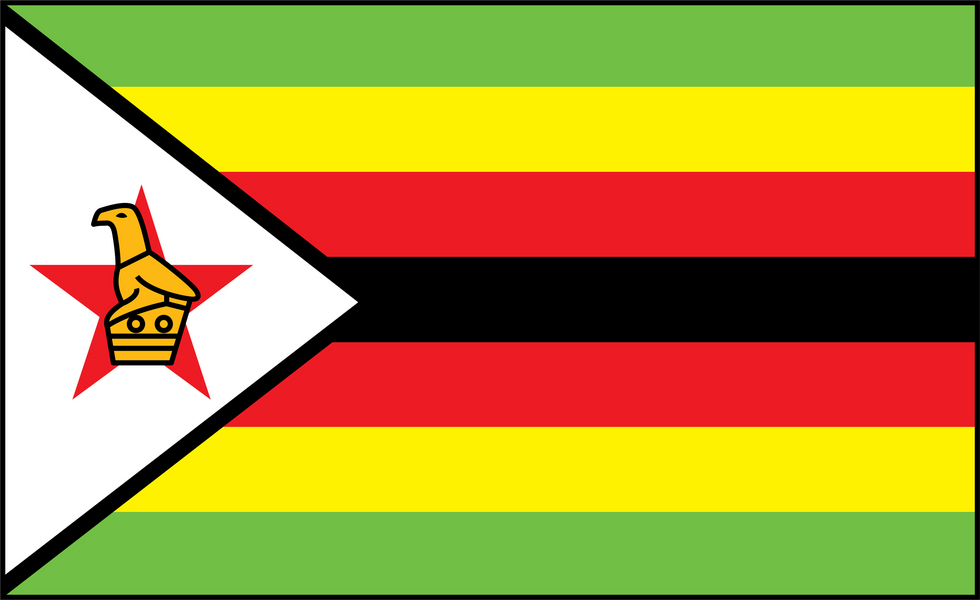
Seven horizontal stripes of green, gold, red, black, red, gold, green, with a white triangle at the flagpole edge containing a red star and a yellow Zimbabwe bird.
Green stands for agriculture, gold for mineral wealth, red for the blood shed in the liberation war, and black for the African majority. The soapstone bird is copied from carvings found at Great Zimbabwe, and the red star stands for the nation's hopes.