
Uganda
Uganda has around half the world's remaining mountain gorillas, living in a forest called the Impenetrable Forest.
- CapitalKampalaBuilt across a set of hills
- PopulationAbout 48 millionOne of the youngest populations on Earth
- Area241,038 km2Including part of Lake Victoria
- Mountain gorillasAbout half the world totalIn Bwindi and Mgahinga
Uganda is a landlocked country on the equator, but it sits at around 1,100 m so the climate is far more comfortable than the latitude suggests. Winston Churchill called it the Pearl of Africa for its greenery.
Bwindi Impenetrable Forest in the south-west holds around half the world's mountain gorillas. The species was down to a few hundred animals; careful protection and tightly controlled tourism have pushed the population back above 1,000.
National symbols
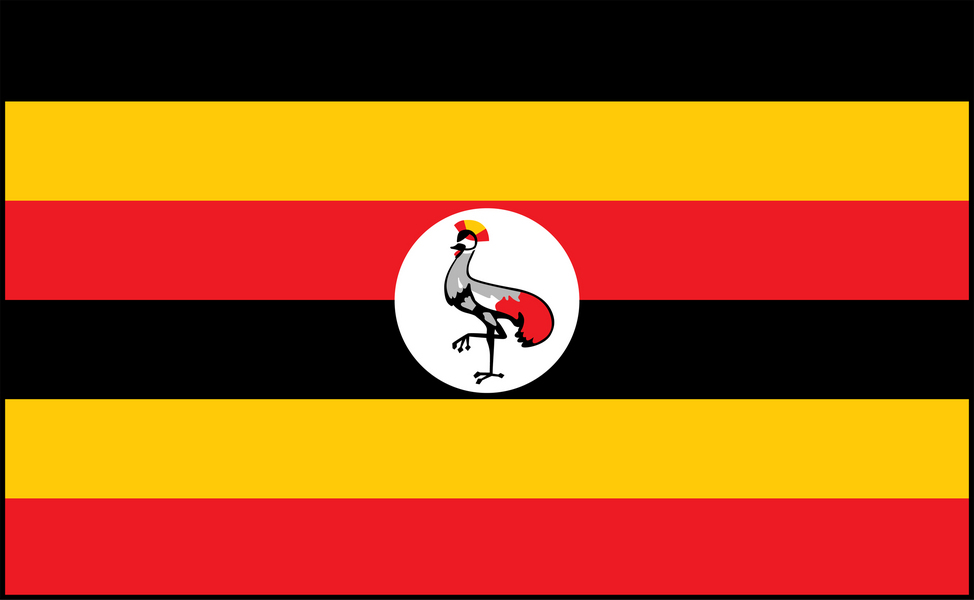
- National bird Grey crowned crane, shown on the flag
- National animal Ugandan kob, an antelope
- National anthem Oh Uganda, Land of Beauty
- National day Independence Day, 9 October
Map of Uganda
Geography
Uganda covers 241,038 km2 and borders South Sudan, Kenya, Tanzania, Rwanda and the Democratic Republic of Congo. It is landlocked, though around a sixth of its area is water.
A large share of Lake Victoria lies within Uganda. The Rwenzori mountains on the Congolese border rise to Margherita Peak at 5,109 m and carry glaciers on the equator. The White Nile leaves Lake Victoria at Jinja and flows north through the country.
Climate
Despite sitting on the equator, Uganda has a mild climate because most of it is a plateau above 1,000 m. Temperatures are generally 21C to 28C all year.
There are two rainy seasons in the south, from March to May and September to November, while the north has a single wet season. The Rwenzori mountains are cold and hold permanent ice near the summits.
Culture
English and Swahili are official, and Luganda is widely spoken around Kampala. Over 40 languages are used across the country.
Around 84 per cent of Ugandans are Christian and around 14 per cent Muslim. Barkcloth, made by beating fig tree bark into a soft fabric, is a Ugandan craft on the UNESCO heritage list and predates woven cloth in the region.
Economy
Agriculture employs most Ugandans. Coffee is the largest export, and Uganda is one of Africa's biggest coffee producers, along with tea, fish from Lake Victoria and cotton.
Gorilla trekking permits are expensive and tightly limited, which makes wildlife tourism a valuable earner. Oil discovered near Lake Albert is being developed.
The flag
Six horizontal bands, black, yellow and red repeated twice, with a white circle in the centre containing a grey crowned crane standing on one leg.
Black stands for the African people, yellow for the sunshine, and red for brotherhood, on the idea that all people share the same colour of blood. The crowned crane was a British colonial emblem for Uganda, and its raised leg is said to suggest the country moving forward.