
Tanzania
Tanzania has the highest mountain in Africa, the largest crater in the world with animals living in it, and part of the deepest lake in Africa.
- CapitalDodomaThough Dar es Salaam is much larger
- PopulationAbout 67 millionIn East Africa
- Area947,303 km2Including Zanzibar
- Kilimanjaro5,895 mThe highest mountain in Africa
Tanzania holds an extraordinary set of landmarks. Kilimanjaro, a dormant volcano and the highest peak in Africa, rises alone from the plains with snow at the summit despite standing close to the equator. The Serengeti hosts the wildebeest migration, and Ngorongoro is a collapsed volcanic crater 600 m deep with around 25,000 large animals living inside it.
Off the coast, the island of Zanzibar was for centuries a centre of the spice and slave trades, and it has its own government within the union.
National symbols
- National animal Giraffe
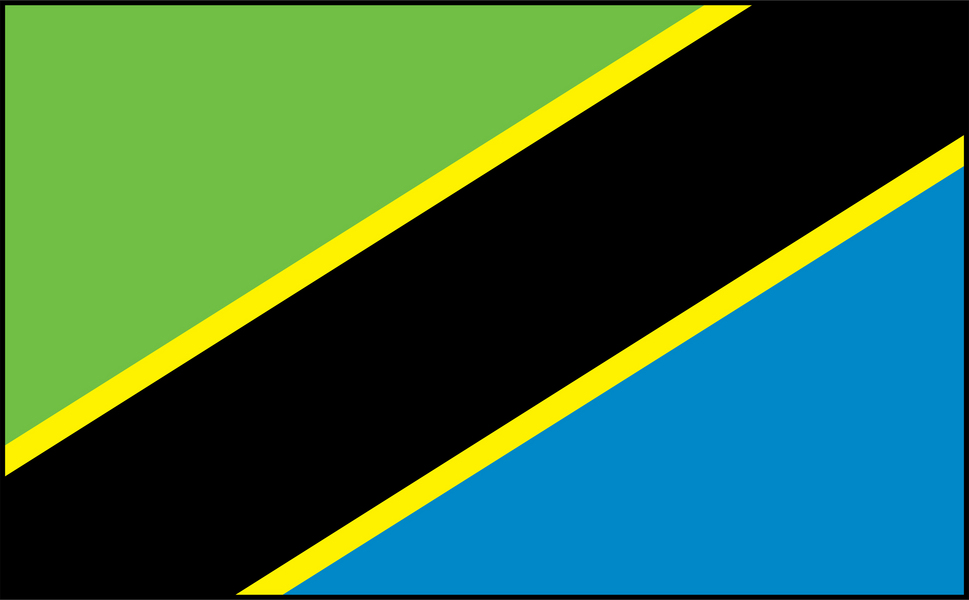
- National colours Green, gold, black and blue
- National anthem Mungu ibariki Afrika (Translation: God Bless Africa)
- National day Union Day, 26 April
Map of Tanzania
Geography
Tanzania covers 947,303 km2 and borders Kenya, Uganda, Rwanda, Burundi, the Democratic Republic of Congo, Zambia, Malawi and Mozambique, with the Indian Ocean to the east.
Kilimanjaro reaches 5,895 m in the north-east. Tanzania touches three of Africa's great lakes: Victoria, the largest, Tanganyika, the second deepest lake in the world, and Nyasa. The Serengeti plains and the Ngorongoro Crater lie in the north.
Climate
The coast and islands are hot and humid all year. The central plateau is drier and cooler, and the mountains are cooler still, with permanent ice near Kilimanjaro's summit though it is shrinking fast.
Most of the country has two rainy seasons, the long rains from March to May and the short rains from November to December, though the south has a single longer wet season.
Culture
Swahili is the national language and English is used in higher education and courts. Swahili developed on this coast from Bantu languages mixed with Arabic through centuries of Indian Ocean trade.
Around 63 per cent of Tanzanians are Christian and around 34 per cent Muslim, with Zanzibar being overwhelmingly Muslim. Makonde wood carving and Tingatinga painting, with its bright enamel colours, are distinctive art forms.
Economy
Agriculture employs most Tanzanians, growing maize, cassava, coffee, cotton and cashew nuts. Tanzania is one of Africa's leading cashew producers.
Tourism is a major earner, built on the northern safari circuit and Zanzibar's beaches. Gold is the largest single export, and Tanzania is the only source of tanzanite, a blue-violet gemstone found nowhere else on Earth.
The flag
A black diagonal band edged with narrow gold stripes runs from the bottom left to the top right, separating a green triangle in the upper left from a blue one in the lower right.
Green stands for the land and its vegetation, blue for the Indian Ocean and the lakes, black for the Swahili people, and gold for the country's mineral wealth. The design combines elements from the separate flags of Tanganyika and Zanzibar, which united in 1964.