
Namibia
Namibia has the oldest desert in the world, with dunes up to 300 m tall that glow bright orange at sunrise.
- CapitalWindhoekIn the central highlands
- PopulationAbout 2.6 millionOne of the least dense countries
- Area824,292 km2Two deserts and a plateau between
- Namib DesertAbout 55 million years oldThe oldest desert on Earth
Namibia has a desert on each side: the Namib along the Atlantic coast and the Kalahari in the east, with a central plateau between them. The Namib is thought to be around 55 million years old, which would make it the oldest desert in the world.
At Sossusvlei the dunes reach around 300 m and are coloured deep orange by iron oxide in the sand. The Skeleton Coast further north is named for the shipwrecks and whale bones scattered along a shoreline where cold ocean fog meets hot desert.
National symbols
- National animal Oryx, or gemsbok
- National bird African fish eagle
- National anthem Namibia, Land of the Brave
- National day Independence Day, 21 March
Map of Namibia
Geography
Namibia covers 824,292 km2 and borders Angola, Zambia, Botswana and South Africa, with the Atlantic Ocean to the west.
The Namib Desert runs the length of the coast, backed by an escarpment rising to a central plateau where Windhoek sits at around 1,700 m. The Kalahari lies to the east. Fish River Canyon in the south is one of the largest canyons in the world.
Climate
Namibia is one of the driest countries in sub-Saharan Africa. The coast is cooled by the Benguela Current, which produces thick fog but almost no rain: some coastal areas average under 15 mm a year.
The interior is hot and dry with a short rainy season from January to April. The far north-east, the Caprivi Strip, is much wetter and greener because it reaches towards the Zambezi.
Culture
English is the official language, chosen at independence as a neutral option, though Afrikaans, German and Oshiwambo are all widely spoken. Around half the population speaks Oshiwambo at home.
Around 90 per cent of Namibians are Christian. The Himba people of the north-west are known for covering their skin and hair in otjize, a mixture of butterfat and ochre that gives a deep red colour and protects against the sun.
Economy
Mining dominates: Namibia is a major producer of diamonds, many of them recovered from the seabed, and one of the world's largest uranium producers.
Tourism built on the deserts and wildlife is growing, helped by a system of community conservancies where local people manage and benefit from wildlife. Fishing in the cold Atlantic waters is also significant.
The flag
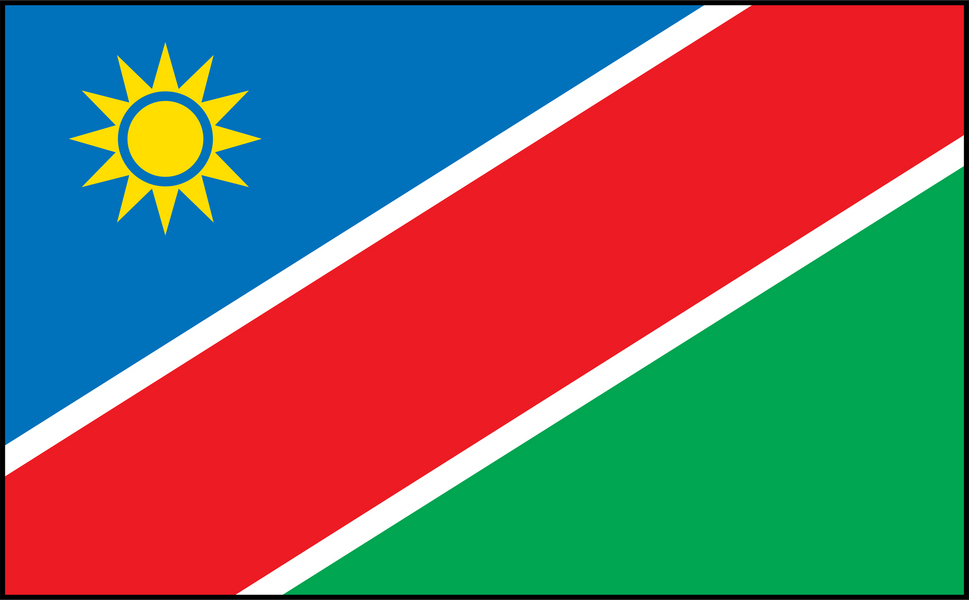
A red diagonal band edged in white runs from the bottom left to the top right, separating a blue triangle in the upper left from a green one in the lower right. A gold sun with twelve triangular rays sits in the blue.
Blue stands for the Atlantic and for rain, red for the Namibian people and their determination, green for vegetation, and white for peace and unity. The gold sun stands for life and energy in a country defined by its sunshine.