
Mozambique
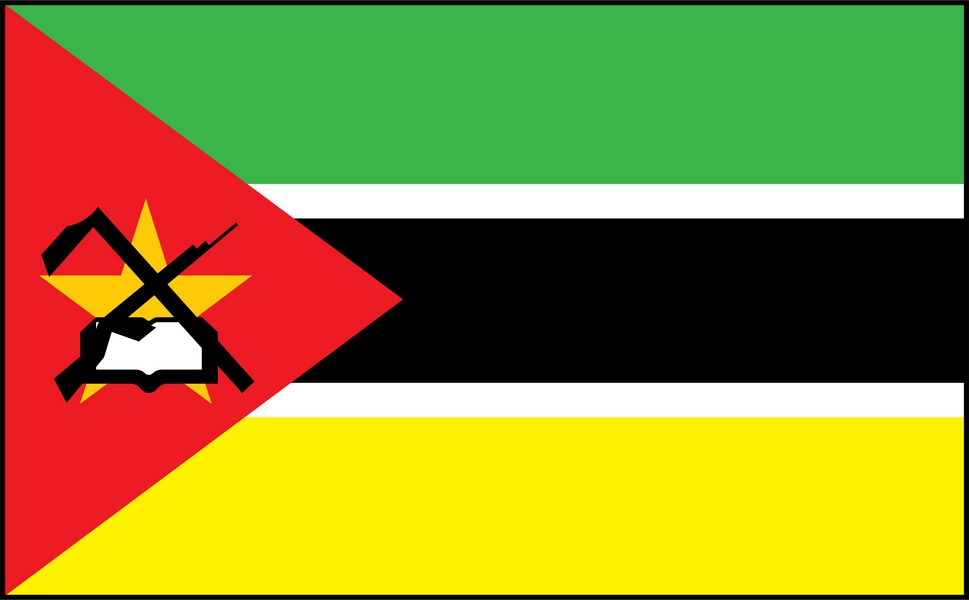
Mozambique is the only country in the world with a modern rifle on its national flag.
- CapitalMaputoIn the far south of a very long country
- PopulationAbout 33 millionAlong a 2,500 km coastline
- Area801,590 km2Long and narrow on the Indian Ocean
- CoastlineAbout 2,500 kmCoral reefs and islands
Mozambique stretches around 2,500 km down the south-east coast of Africa. Its coastline of coral reefs, mangroves and islands is one of the richest marine environments in the Indian Ocean, home to dugongs, whale sharks and manta rays.
The Zambezi River crosses the country from west to east, and the Cahora Bassa dam on it is one of Africa's largest hydroelectric schemes, selling power to South Africa and Zimbabwe.
National symbols
- National colours Green, black, yellow, white and red
- National anthem Patria Amada (Translation: Beloved Homeland)
- National day Independence Day, 25 June
- National emblem Book, hoe and rifle over a rising sun
Map of Mozambique
Geography
Mozambique covers 801,590 km2 and borders Tanzania, Malawi, Zambia, Zimbabwe, Eswatini and South Africa, with the Indian Ocean along its entire eastern side.
Coastal lowlands make up nearly half the country, rising to plateaus and highlands in the north and west. Mount Binga on the Zimbabwean border is the highest point at 2,436 m. The Zambezi crosses the middle and is dammed at Cahora Bassa.
Climate
Mozambique is tropical, with a hot wet season from October to March and a cooler dry season from April to September.
The north is wetter than the south, and the interior highlands are cooler. Cyclones from the Indian Ocean strike the coast regularly and can be catastrophic: Cyclone Idai in 2019 flooded a large area around Beira.
Culture
Portuguese is the official language, a legacy of nearly 500 years of Portuguese rule, and over 40 local languages are spoken, including Makhuwa and Sena.
Around 56 per cent of Mozambicans are Christian and around 18 per cent Muslim, mostly along the northern coast where Arab and Swahili traders settled centuries ago. Marrabenta is the best-known Mozambican music, and Makonde wood carving is internationally collected.
Economy
Aluminium from the Mozal smelter near Maputo is a major export, along with coal, cotton, cashew nuts, sugar and prawns.
Enormous offshore natural gas reserves found in the north could transform the economy, though development has been disrupted by an insurgency in Cabo Delgado province. Hydroelectric power from Cahora Bassa is sold to neighbours.
The flag
Three horizontal bands of green, black and yellow, separated by white lines, with a red triangle at the flagpole edge.
On the triangle sits a yellow star bearing an open book, a hoe and an AK-47 rifle with a bayonet. The book stands for education, the hoe for agriculture, and the rifle for the armed struggle that won independence in 1975. Green is the land, black the continent, yellow the minerals, white peace and red the fight for freedom.