
Morocco
Morocco has snow-capped mountains, Atlantic surf beaches and the Sahara Desert, all within a few hours of each other.
- CapitalRabatThough Casablanca is far larger
- PopulationAbout 37 millionNorth-west corner of Africa
- Area446,550 km2Excluding Western Sahara
- Toubkal4,167 mThe highest peak in North Africa
Morocco sits at the north-west corner of Africa, only 14 km from Spain across the Strait of Gibraltar. The Atlas Mountains run diagonally across the country, separating the fertile Atlantic and Mediterranean coasts from the Sahara beyond.
The old walled cities, called medinas, at Fez and Marrakesh are mazes of narrow lanes, souks and workshops. Fez el Bali is often described as the largest car-free urban area in the world, because the streets are too narrow for vehicles.
National symbols
- National animal Barbary lion, and the Barbary macaque
- National flower Rose
- National anthem Cherifian Anthem
- National day Throne Day, 30 July
Map of Morocco
Geography
Morocco covers 446,550 km2 and borders Algeria and Mauritania, with the Atlantic Ocean to the west and the Mediterranean Sea to the north. The Strait of Gibraltar separates it from Spain by only about 14 km.
The Rif mountains run along the north and the Atlas ranges cut diagonally across the country, rising to Toubkal at 4,167 m, the highest peak in North Africa. South and east of the Atlas the land drops into the Sahara.
Climate
The coasts have a Mediterranean climate with mild wet winters and warm dry summers, cooled on the Atlantic side by ocean currents.
The Atlas Mountains get real snow and support ski resorts. Beyond them the Sahara is extremely hot and dry, with summer temperatures above 45C and almost no rain.
Culture
Arabic and Amazigh, also called Berber, are both official. Amazigh is written in the Tifinagh script and is the language of the Indigenous peoples of North Africa. French is widely used in business.
Almost all Moroccans are Muslim. Mint tea, poured from a height into small glasses, is a ritual of hospitality. Moroccan crafts include zellige tilework, leather tanning in Fez and hand-knotted Berber carpets.
Economy
Morocco holds around 70 per cent of the world's phosphate rock reserves, used to make fertiliser, and is a leading exporter.
Car manufacturing has grown fast and is now the largest export sector by value. Agriculture produces citrus, olives, tomatoes and argan oil, and tourism draws visitors to Marrakesh, the coast and the desert.
The flag
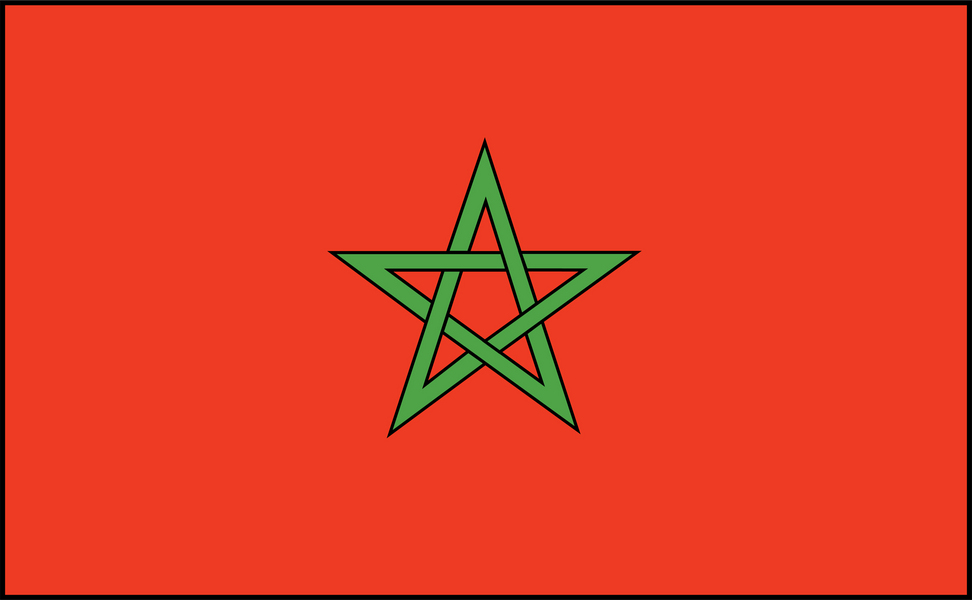
A red field with a green five-pointed star in the centre, drawn as a single interlaced line rather than an outline.
Red has been associated with Moroccan rulers for centuries. The star is called the Seal of Solomon, and its five points are usually taken to stand for the five pillars of Islam. The green star was added in 1915 to distinguish the flag at sea.