
Lesotho
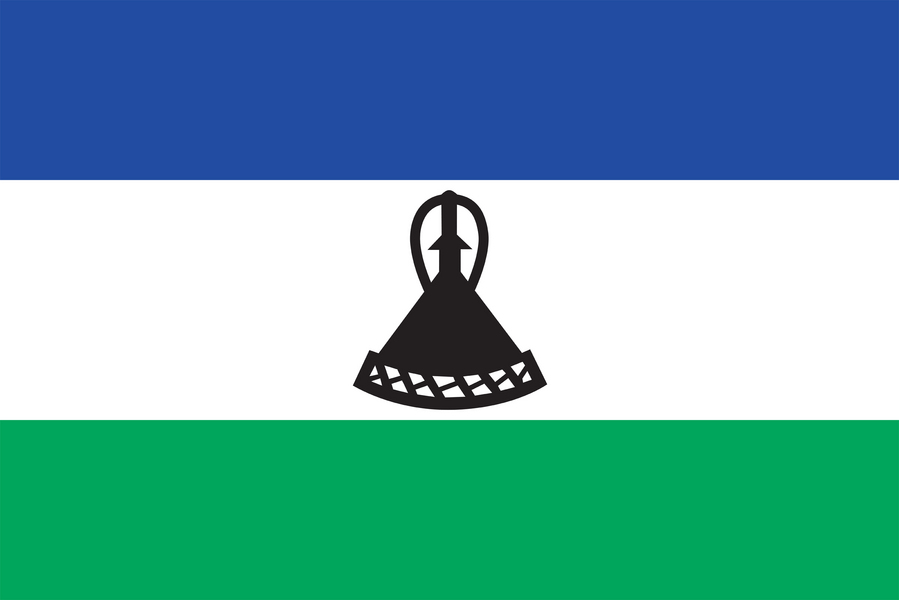
Lesotho is the only country in the world entirely above 1,000 m, and it is completely surrounded by one other country.
- CapitalMaseruOn the South African border
- PopulationAbout 2.3 millionEntirely surrounded by South Africa
- Area30,355 km2All of it above 1,000 m
- Lowest point1,400 mThe highest low point of any country
Lesotho is one of only three countries completely surrounded by a single other country, in its case South Africa. The other two are San Marino and Vatican City, both inside Italy.
It is also the only country in the world whose entire territory lies above 1,000 m. Its lowest point, at around 1,400 m, is higher than the lowest point of any other nation, which is why it is nicknamed the Kingdom in the Sky.
National symbols
- National animal Basotho pony
- National emblem Mokorotlo, the conical straw hat on the flag
- National anthem Lesotho Fatse La Bontata Rona (Translation: Lesotho, Land of Our Fathers)
- National day Independence Day, 4 October
Map of Lesotho
Geography
Lesotho covers 30,355 km2 and is completely surrounded by South Africa. It is landlocked with only one neighbour.
The Drakensberg and Maloti mountains cover most of the country, rising to Thabana Ntlenyana at 3,482 m, the highest peak in southern Africa. The Orange River, the longest in South Africa, rises here. The lowest point in the country is around 1,400 m.
Climate
Lesotho has a temperate highland climate with four seasons. Summers are warm and wet, and winters are cold and dry with regular snowfall in the mountains.
Temperatures can drop below minus 10C in the highlands in winter, and snow can fall even in summer at the highest altitudes. Most rain falls between October and April.
Culture
Sesotho and English are both official. Almost everyone is Basotho, making Lesotho one of the most culturally uniform countries in Africa.
Around 95 per cent of Basotho are Christian. The distinctive Basotho blanket, worn as a cloak, is both practical against the cold and a marker of status and occasion. The mokorotlo, a conical straw hat, is the national emblem and appears on the flag.
Economy
Water is the flagship export, sold to South Africa through the Highlands Water Project, along with hydroelectricity generated on the way.
Textiles and clothing manufactured for American and South African brands are the largest manufactured export. Diamonds are mined at high altitude, and money sent home by Basotho working in South African mines has long been important.
The flag
Three horizontal bands of blue, white and green with a black mokorotlo, the traditional Basotho straw hat, in the centre.
Blue stands for rain, white for peace and green for prosperity. The black hat represents the Basotho people themselves. The flag was adopted in 2006 for the 40th anniversary of independence, deliberately replacing a design that featured a shield and weapons with one emphasising peace.