
Guinea
Guinea is where three of West Africa's great rivers begin, including the Niger, which is why it is nicknamed the water tower of West Africa.
- CapitalConakryOn a peninsula on the Atlantic coast
- PopulationAbout 14 millionIn West Africa
- Area245,857 km2Coast, highlands and savannah
- BauxiteLargest reserves on EarthThe rock aluminium comes from
Guinea has an Atlantic coast, then rises inland to the Fouta Djallon highlands, a wet plateau of sandstone that catches heavy rain. Three major rivers rise there: the Niger, the Senegal and the Gambia, which is why Guinea is called the water tower of West Africa.
Underground, Guinea holds the largest bauxite reserves in the world. Bauxite is the ore that aluminium is made from, so a substantial share of the world's aluminium starts in Guinean mines.
National symbols
- National animal African elephant
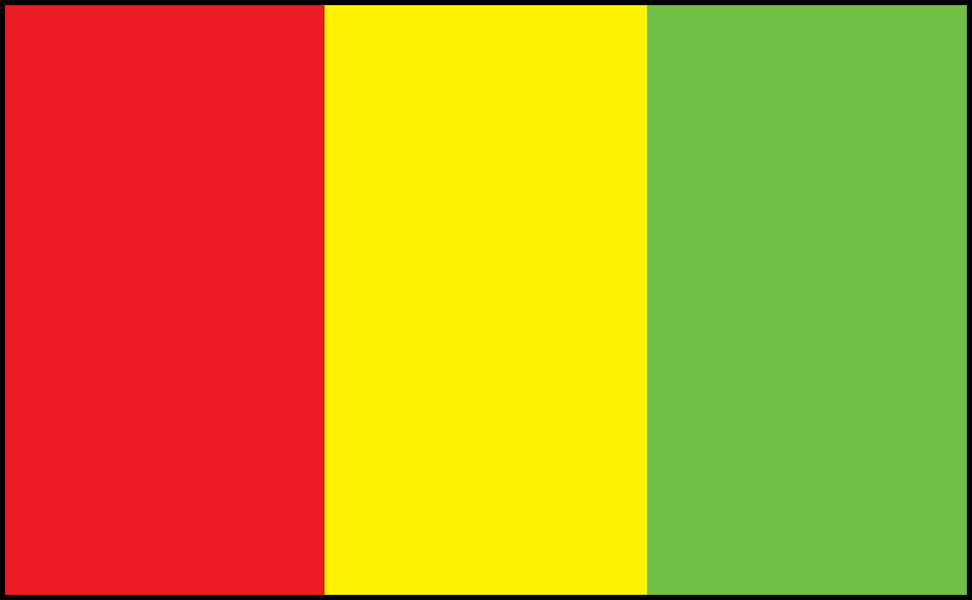
- National colours Red, yellow and green
- National anthem Liberte (Translation: Freedom)
- National day Independence Day, 2 October
Map of Guinea
Geography
Guinea covers 245,857 km2 and borders Guinea-Bissau, Senegal, Mali, Ivory Coast, Liberia and Sierra Leone, with the Atlantic Ocean to the west.
A coastal plain rises to the Fouta Djallon highlands in the middle, then to savannah in the north-east and forested hills in the south-east. Mount Nimba, at 1,752 m, is the highest point.
Climate
Guinea is tropical with a long rainy season from May to November. Conakry is one of the wettest capital cities in the world, receiving over 3,000 mm of rain a year.
The dry season from December to April is dominated by the harmattan, a dusty wind from the Sahara. The Fouta Djallon highlands are noticeably cooler than the coast because of their altitude.
Culture
French is the official language, and around 24 local languages are spoken, chiefly Fula, Maninka and Susu.
Around 89 per cent of Guineans are Muslim. Guinea has a strong musical tradition: the djembe drum comes from this region, and Les Ballets Africains, founded here, was one of the first African dance companies to tour the world.
Economy
Bauxite mining dominates exports, and Guinea supplies a large share of the world's supply. Gold, diamonds and iron ore are also mined, including at the huge Simandou iron ore deposit.
Most people farm rice, cassava and maize for themselves. Despite its mineral wealth Guinea remains one of the poorer countries in the region.
The flag
Three vertical bands of red, yellow and green, the pan-African colours arranged in the French tricolour layout.
Red stands for the blood of those who died for independence and the sacrifice of labour, yellow for the sun and the country's mineral wealth, especially gold and bauxite, and green for its vegetation. It is the mirror image of Mali's flag.