
Ghana
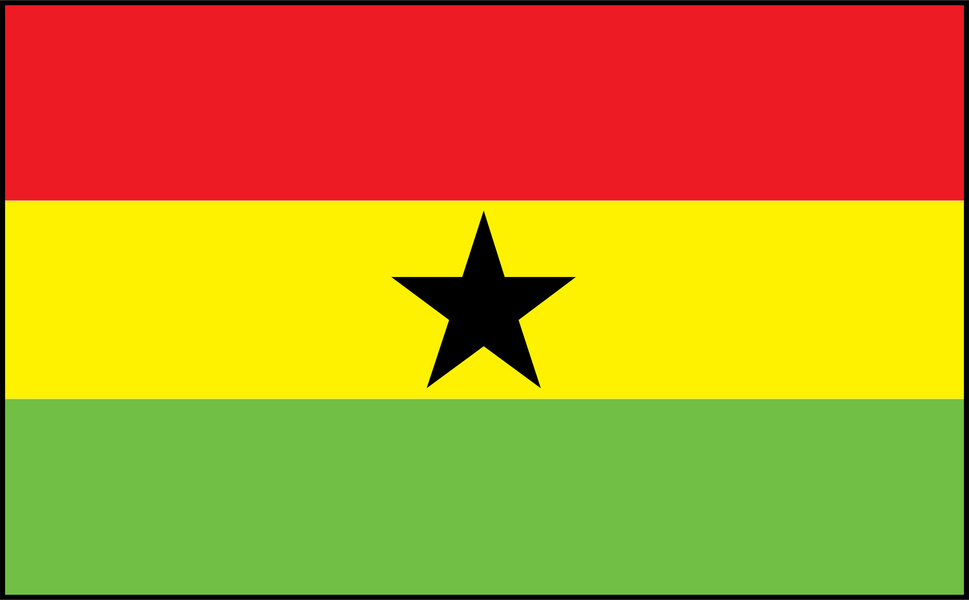
Ghana was the first country in sub-Saharan Africa to gain independence from colonial rule, in 1957.
- CapitalAccraOn the Gulf of Guinea coast
- PopulationAbout 34 millionIn West Africa
- Area238,533 km2Coast, forest and northern savannah
- Independence1957The first in sub-Saharan Africa
Ghana runs north from the Gulf of Guinea, through rainforest and cocoa country, to dry savannah near Burkina Faso. Lake Volta, created by damming the Volta River in 1965, is one of the largest artificial lakes in the world by surface area.
When Ghana became independent in 1957 under Kwame Nkrumah, it was the first sub-Saharan African country to do so, and it inspired independence movements across the continent. It took the name Ghana from a medieval West African empire.
National symbols
- National animal Tawny eagle
- National colours Red, gold, green and black
- National anthem God Bless Our Homeland Ghana
- National day Independence Day, 6 March
Map of Ghana
Geography
Ghana covers 238,533 km2 and borders Ivory Coast, Burkina Faso and Togo, with the Gulf of Guinea to the south.
The land is mostly low plains, rising to the Akwapim-Togo ranges in the east where Mount Afadja reaches 885 m. Lake Volta covers around 8,500 km2, one of the largest reservoirs in the world by area, and the Akosombo Dam that formed it supplies much of the country's electricity.
Climate
Ghana is tropical. The south-west is wettest, with two rainy seasons and thick forest, while the north has a single wet season and dry savannah.
The harmattan, a dry dusty wind from the Sahara, blows south between December and February, dropping humidity sharply and hazing the sky. Temperatures stay warm all year, generally 24C to 33C.
Culture
English is the official language, and around 80 local languages are spoken. Twi, part of the Akan group, has the most speakers.
Around 71 per cent of Ghanaians are Christian and around 20 per cent Muslim. Adinkra symbols, each carrying a proverb or idea, are stamped on cloth and carved into buildings. Ghana is known for elaborate funerals and for fantasy coffins carved into shapes such as fish, aeroplanes or cocoa pods.
Economy
Gold is the largest export, and Ghana is one of Africa's biggest producers. The country was called the Gold Coast under British rule for exactly that reason.
Cocoa is the other pillar, along with oil found offshore in 2007. Ghana has one of the more stable and democratic political systems in the region, which has helped attract investment.
The flag
Three horizontal bands of red, gold and green with a black five-pointed star in the centre of the gold band.
Red stands for the blood of those who died for independence, gold for the country's mineral wealth, and green for its forests. The black star is a symbol of African freedom, taken from the Black Star Line shipping company, and it gave the national football team its nickname, the Black Stars.