
The Gambia
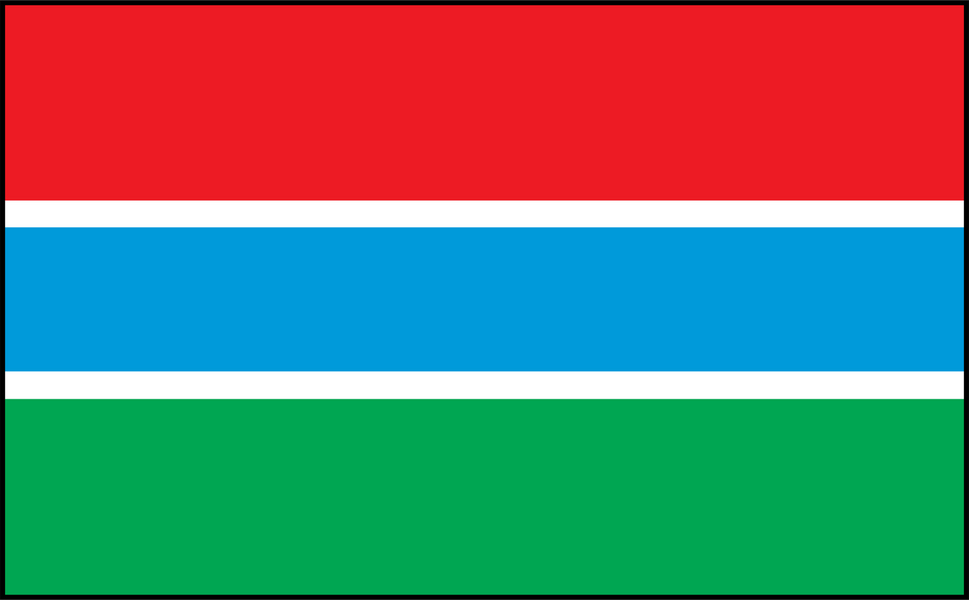
The Gambia is the smallest country on mainland Africa, a narrow ribbon of land following a river and surrounded by Senegal.
- CapitalBanjulOn an island at the river mouth
- PopulationAbout 2.8 millionThe smallest mainland African country
- Area11,295 km2A strip along the Gambia River
- WidthAbout 25 to 50 kmFollowing the river inland
The Gambia is essentially a river with a country around it. It follows the Gambia River inland for around 480 km and is rarely more than 50 km wide, surrounded on three sides by Senegal with a short Atlantic coast at the mouth.
That odd shape comes from colonial negotiation: Britain took the navigable river and a strip of land on each bank, while France took the surrounding territory that became Senegal.
National symbols
- National animal Nile crocodile
- National colours Red, blue, green and white
- National anthem For The Gambia Our Homeland
- National day Independence Day, 18 February
Map of The Gambia
Geography
The Gambia covers 11,295 km2 and is surrounded by Senegal on all sides except for a short Atlantic coastline at the river mouth.
The country follows the Gambia River inland for around 480 km and is between about 25 and 50 km wide. The land is low and flat, with the highest point only around 53 m. Mangroves line the lower river and savannah covers the interior.
Climate
The Gambia has a tropical climate with a hot rainy season from June to October and a cooler dry season from November to May.
The dry season is comfortable, with sea breezes on the coast, which is why European tourists visit in winter. Inland temperatures in the hot months before the rains can exceed 40C.
Culture
English is the official language, and Mandinka, Wolof, Fula and Jola are the main spoken languages.
Around 96 per cent of Gambians are Muslim. Griots, hereditary musicians and oral historians, play the kora, a 21-string harp-lute, and preserve family histories going back centuries. The Gambia is often called the Smiling Coast of Africa.
Economy
Tourism is a leading industry, based on the Atlantic beaches and the river, and it is heavily concentrated in the European winter.
Groundnuts are the main agricultural export, along with fish and cashews. Re-export trade through the port of Banjul and money sent home by Gambians abroad are both important, and the country remains one of the poorest in the world.
The flag
Three horizontal bands of red, blue and green, with the blue band separated from the other two by narrow white stripes.
Red stands for the sun and the savannah, blue for the Gambia River that defines the country, and green for the forests and farmland along it. The white stripes stand for peace and unity. It is a rare African flag with no political or pan-African symbolism at all.