
Gabon
Gabon protects around 11 per cent of its land as national parks, and its beaches are one of the few places where forest elephants walk out onto the sand.
- CapitalLibrevilleOn the Atlantic coast
- PopulationAbout 2.4 millionOn the equator in central Africa
- Area267,668 km2Around 88 per cent forest
- National parks13, covering 11 per centCreated all at once in 2002
Gabon sits on the equator on the Atlantic coast of central Africa. Around 88 per cent of it is rainforest, and because the population is small and mostly urban, much of that forest is still intact.
In 2002 the president created 13 national parks at once, covering around 11 per cent of the country. At Loango, forest elephants, buffalo and hippos come out of the trees onto Atlantic beaches, a sight found almost nowhere else.
National symbols
- National animal Black panther
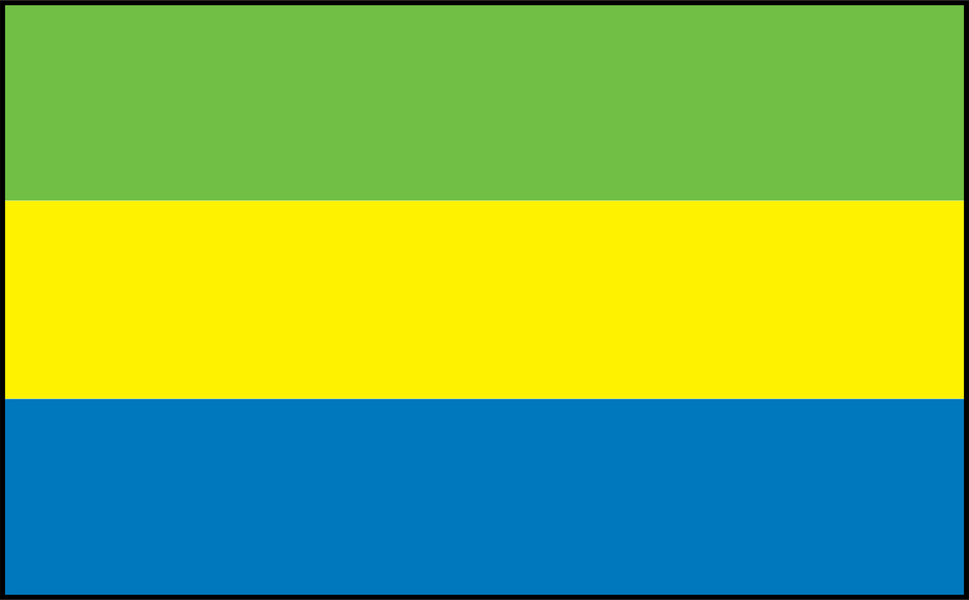
- National colours Green, yellow and blue
- National anthem La Concorde (Translation: The Concord)
- National day Independence Day, 17 August
Map of Gabon
Geography
Gabon covers 267,668 km2 and borders Equatorial Guinea, Cameroon and the Republic of Congo, with the Atlantic Ocean to the west.
A coastal plain rises to hills and plateaus inland, reaching Mont Iboundji at around 1,575 m. Rainforest covers around 88 per cent of the country. The Ogooue River crosses it from east to west and drains most of its area.
Climate
Gabon is equatorial: hot, humid and wet, generally 24C to 33C with little seasonal change in temperature.
There are two rainy seasons and two drier ones. Rainfall is heavy, typically 1,500 to 3,000 mm a year, which is what sustains the forest. The long dry season from June to September is cooler and often overcast.
Culture
French is the official language and is spoken by a large majority, and around 40 local languages including Fang and Myene are also used.
Around 76 per cent of Gabonese are Christian. Bwiti, a spiritual tradition using the iboga plant in ceremonies, is practised by some communities. Gabonese reliquary figures, carved to guard ancestral remains, strongly influenced European modern artists including Picasso.
Economy
Oil has dominated the economy since the 1970s and gives Gabon one of the higher incomes per person in Africa, though the wealth is very unevenly shared.
Manganese mining is the second largest export, and Gabon is one of the world's biggest producers. Timber, especially okoume wood used for plywood, is significant, and the country has banned raw log exports to encourage local processing.
The flag
Three horizontal bands of green, yellow and blue. Green stands for the forests that cover most of the country, yellow for the equator running through it and for the sun, and blue for the Atlantic Ocean.
It is one of very few African flags that does not use the pan-African colours of red, gold and green, and its simple three-band design was adopted at independence from France in 1960.