
Equatorial Guinea
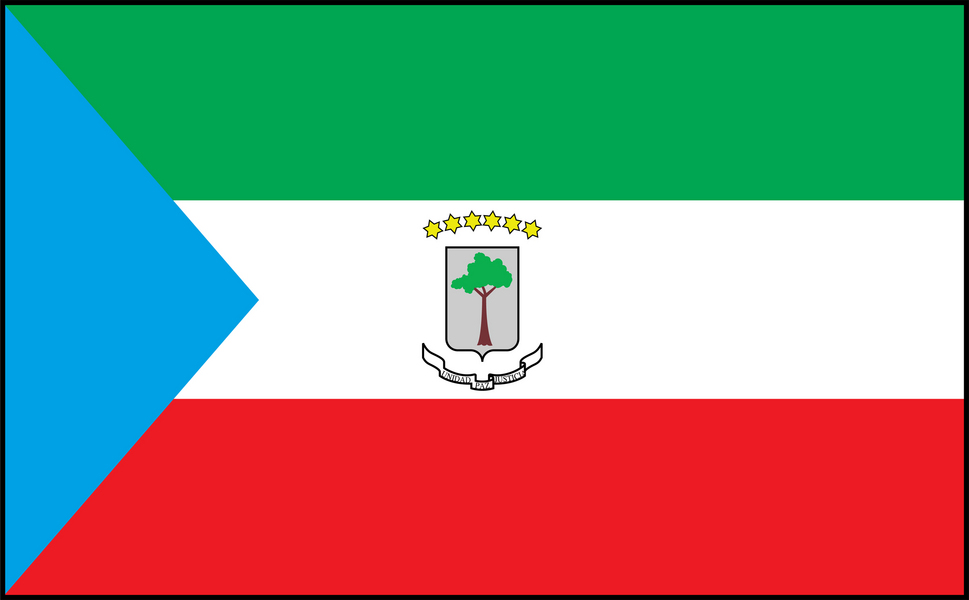
Equatorial Guinea is the only African country where Spanish is an official language, and its capital sits on an island.
- CapitalMalaboOn the island of Bioko, not the mainland
- PopulationAbout 1.7 millionSplit between mainland and islands
- Area28,051 km2Mainland Rio Muni plus five islands
- LanguageSpanishThe only African country where it is official
Equatorial Guinea is split in two. The mainland part, Rio Muni, sits between Cameroon and Gabon. The islands, including Bioko where the capital Malabo stands, lie in the Gulf of Guinea, and Bioko is actually closer to Cameroon than to the country's own mainland.
It was a Spanish colony until 1968, which is why Spanish is an official language, the only African country where that is the case. French and Portuguese are also official.
National symbols
- National tree Silk cotton tree, shown on the coat of arms
- National colours Green, white, red and blue
- National anthem Caminemos pisando las sendas (Translation: Let Us Tread the Path)
- National day Independence Day, 12 October
Map of Equatorial Guinea
Geography
Equatorial Guinea covers 28,051 km2. The mainland region, Rio Muni, borders Cameroon and Gabon. Bioko, Annobon and three smaller islands lie in the Gulf of Guinea.
Bioko is volcanic and mountainous, rising to Pico Basile at 3,011 m, the highest point in the country. The mainland is coastal plain rising to interior hills, mostly covered in rainforest.
Climate
The country is equatorial, hot and humid all year with heavy rainfall, generally 24C to 32C.
Bioko is one of the wettest places in Africa, with parts of the island receiving over 10,000 mm of rain a year. The mainland is slightly drier with a distinct dry season from December to February.
Culture
Spanish, French and Portuguese are all official. Fang and Bubi are the most widely spoken indigenous languages, Fang on the mainland and Bubi on Bioko.
Around 88 per cent of the population is Roman Catholic. Traditional Fang music uses the mvet, a stringed instrument played while reciting epic tales, and Bubi culture on Bioko is distinct from that of the mainland.
Economy
Oil and gas discovered in the 1990s transformed the economy, giving Equatorial Guinea one of the highest incomes per person in Africa on paper.
That wealth is very unevenly distributed, and most of the population has seen limited benefit. Timber, cocoa and fishing are the other economic activities, and production of oil has been declining.
The flag
Three horizontal bands of green, white and red with a blue triangle at the flagpole edge and the coat of arms in the centre of the white band.
Green stands for the country's natural resources and jungle, white for peace, red for the blood of independence fighters, and blue for the sea linking the mainland and the islands. The coat of arms shows a silk cotton tree and six stars for the mainland and the five islands.