
Cape Verde
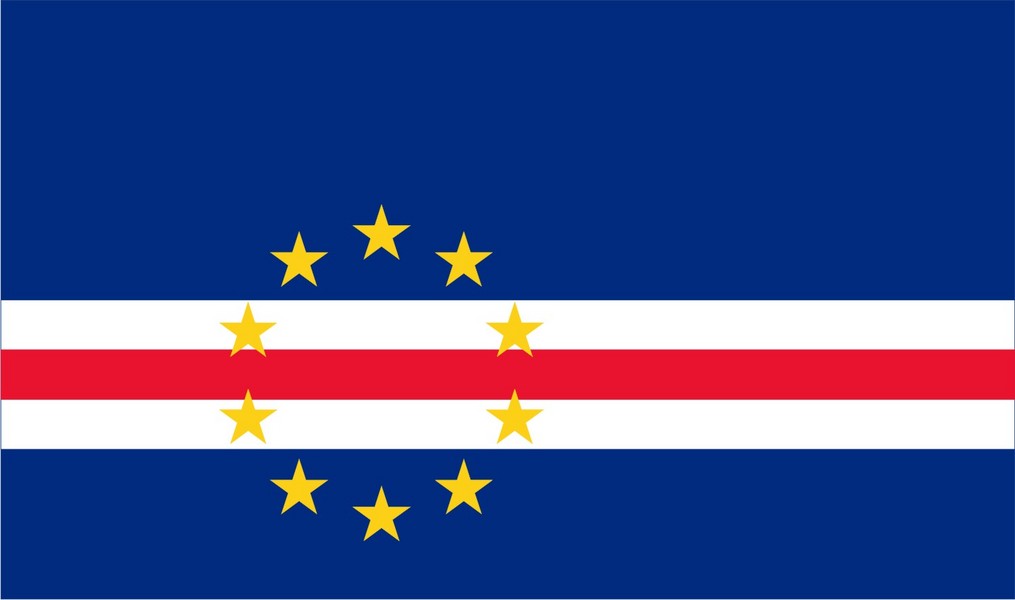
Cape Verde is a volcanic archipelago 570 km off the African coast, and its music, morna, is on the UNESCO heritage list.
- CapitalPraiaOn the island of Santiago
- PopulationAbout 590,000On ten volcanic islands
- Area4,033 km2Ten main islands, nine inhabited
- DiasporaMore abroad than at homeEspecially in the USA and Portugal
Cape Verde, or Cabo Verde, is a group of ten volcanic islands in the Atlantic about 570 km west of Senegal. Pico do Fogo, on the island of Fogo, is an active volcano rising to 2,829 m, and people still farm coffee and grapes inside its crater.
The islands were uninhabited until the Portuguese arrived in 1456, so Cape Verdean culture is entirely Creole, formed from Portuguese settlers and enslaved West Africans. More Cape Verdeans live abroad than in the country itself.
National symbols
- National bird Grey-headed kingfisher
- National colours Blue, white, red and yellow
- National anthem Cantico da Liberdade (Translation: Song of Freedom)
- National day Independence Day, 5 July
Map of Cape Verde
Geography
Cape Verde covers 4,033 km2 and has no land borders, lying in the Atlantic about 570 km west of Senegal.
All ten main islands are volcanic. Pico do Fogo is the highest point at 2,829 m and is still active, last erupting in 2014. The eastern islands, Sal, Boa Vista and Maio, are flat, sandy and dry, while the western ones are steeper and greener.
Climate
Cape Verde has a hot semi-arid climate, moderated by the Atlantic so it is rarely uncomfortably hot, generally 22C to 29C all year.
Rainfall is very low and unreliable, mostly between August and October, and droughts have historically caused famine and emigration. The trade winds blow steadily, which is why the islands are a world-class windsurfing destination.
Famous landmarks
There are many impressive landmarks, monuments and buildings in Cape Verde including the Museum of Culture in Santa Maria, Fortress of San Felipe, Lighthouse of D. Maria Pia, cathedrals, churches, chapels, and various historical sites, monuments and buildings of interest.
Cape Verde is famous for being a popular tourist destination as people are attracted to the beautiful beaches, rich culture and stunning scenery that the islands have to offer.
Culture
Portuguese is the official language and Cape Verdean Creole is what everyone speaks day to day.
Around 77 per cent of the population is Roman Catholic. The culture is entirely Creole, since the islands had no indigenous population. Morna and coladeira music, along with the Carnival at Mindelo, are the best-known cultural exports.
History
The first human inhabitants came from Europe and arrived during the 15th Century. Before this time, the islands were unoccupied. Portuguese explorers discovered Cape Verde and colonized the archipelago of islands. The island group became an important part of the Atlantic slave trade that occurred from the 15th to 19th century. During these years, Cape Verde thrived as it was used as a trading centre for slaves. The islands were favored by sea merchants, pirates and privateers who took advantage of their location off the coast of West Africa.
Cape Verde faced an economic struggle during the 19th century when the slave trade came to an end, and for a time, the archipelago of islands became less important. However, the situation began to recover when the harbour of Mindelo was identified as being an excellent stopping point and location for transatlantic shipping, and thus, it became a prominent commercial centre. Portugal changed the status of Cape Verde from a colony to an overseas department of Portugal in 1951, and following a long, hard struggle, Cape Verde eventually gained independence in 1975.
Economy
Tourism is the largest industry, concentrated on the beaches of Sal and Boa Vista, and it has grown rapidly in recent decades.
Fishing, especially tuna, and light manufacturing are also important. Money sent home by the very large Cape Verdean diaspora is a substantial source of income. The country imports most of its food because so little land is farmable.
The flag
A blue field with a band of white, red and white stripes across the lower half, and a circle of ten yellow five-pointed stars.
Blue stands for the ocean and sky, white for peace, and red for effort. The ten stars represent the ten main islands, arranged in a circle to show their unity, and their position off-centre reflects the islands' position in the Atlantic.
